Blood Pressure 134 over 43 - what do these values mean?

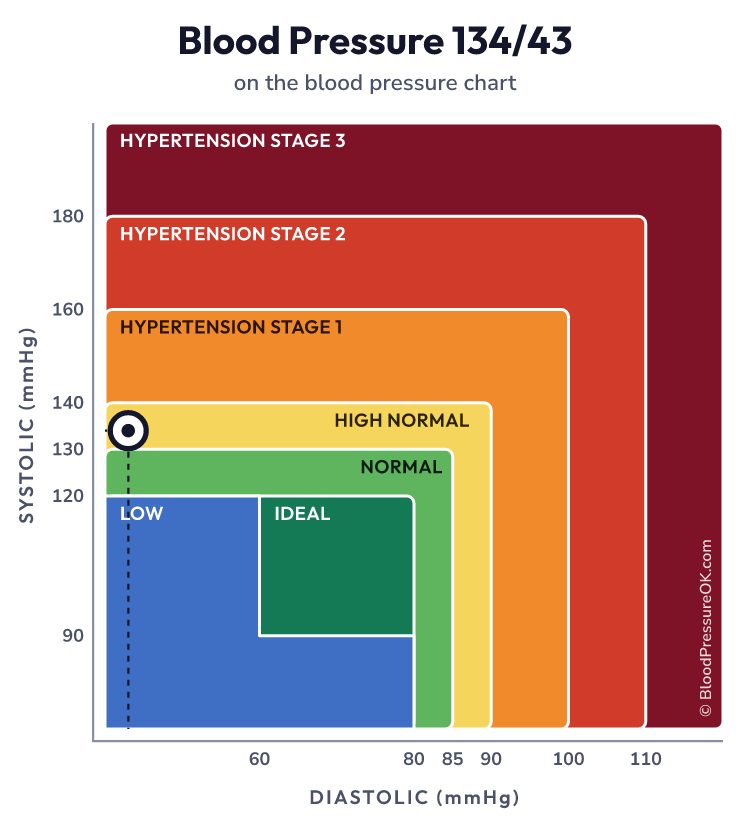
Borderline. 134/43 is high normal — not yet hypertension by international guidelines, but the step before it (US guidelines call it stage 1 hypertension).
- International (ESH)High normal
- US guideline (ACC/AHA)Stage 1 hypertension
- Pulse pressure91 mmHg
- Mean arterial pressure73 mmHg
What to do now
- Lifestyle changes now: less salt, more potassium-rich foods, regular exercise, weight loss if needed, less alcohol.
- Measure at home over a week and re-check yearly — more often if you have diabetes, kidney or heart disease.
The systolic (upper) number decides: on its own your diastolic value of 43 would be ideal (optimal). When the two numbers fall into different categories, the higher one counts.
Blood pressure 134/43 on the blood pressure chart
- Low blood pressure
- Ideal (optimal)
- Normal
- High normal
- Hypertension stage 1
- Hypertension stage 2
- Hypertension stage 3
Read more about this category: High normal.
International and US categories
| International (ESH) | Range | US (ACC/AHA) |
|---|---|---|
| Ideal (optimal) | < 120 and < 80 | Normal |
| Normal | 120–129 and/or 80–84 | Elevated / stage 1 |
| High normal | 130–139 and/or 85–89 | Stage 1 |
| Stage 1 (grade 1) | 140–159 and/or 90–99 | Stage 2 |
| Stage 2 (grade 2) | 160–179 and/or 100–109 | Stage 2 |
| Stage 3 (grade 3) | ≥ 180 and/or ≥ 110 | Stage 2 / crisis > 180/120 |
| Low | < 90 or < 60 | Low |
International categories: European Society of Hypertension (ESH) 2023, office readings. Home readings use lower thresholds — hypertension from an average of 135/85.
Pulse pressure and mean arterial pressure
A pulse pressure of 91 mmHg is wide (above 60). In older adults it usually reflects stiffer arteries. Mean arterial pressure — the average pressure perfusing your organs — is about 73 mmHg (normal roughly 70–100).
Measure it right
- No caffeine, exercise or smoking for 30 minutes; empty your bladder.
- Sit with back supported, feet flat, for 5 minutes. Don't talk.
- Upper-arm cuff of the right size on bare skin, arm supported at heart level.
- Two readings a minute apart, morning and evening, for 7 days — use the average.
Details: Measuring Blood Pressure Correctly: Step by Step
Check another reading
Nearby readings
This page explains one reading in general terms. High blood pressure is diagnosed from repeated measurements. Not medical advice — talk to your doctor about your readings.