Hypertension Stage 2 (160–179 / 100–109)
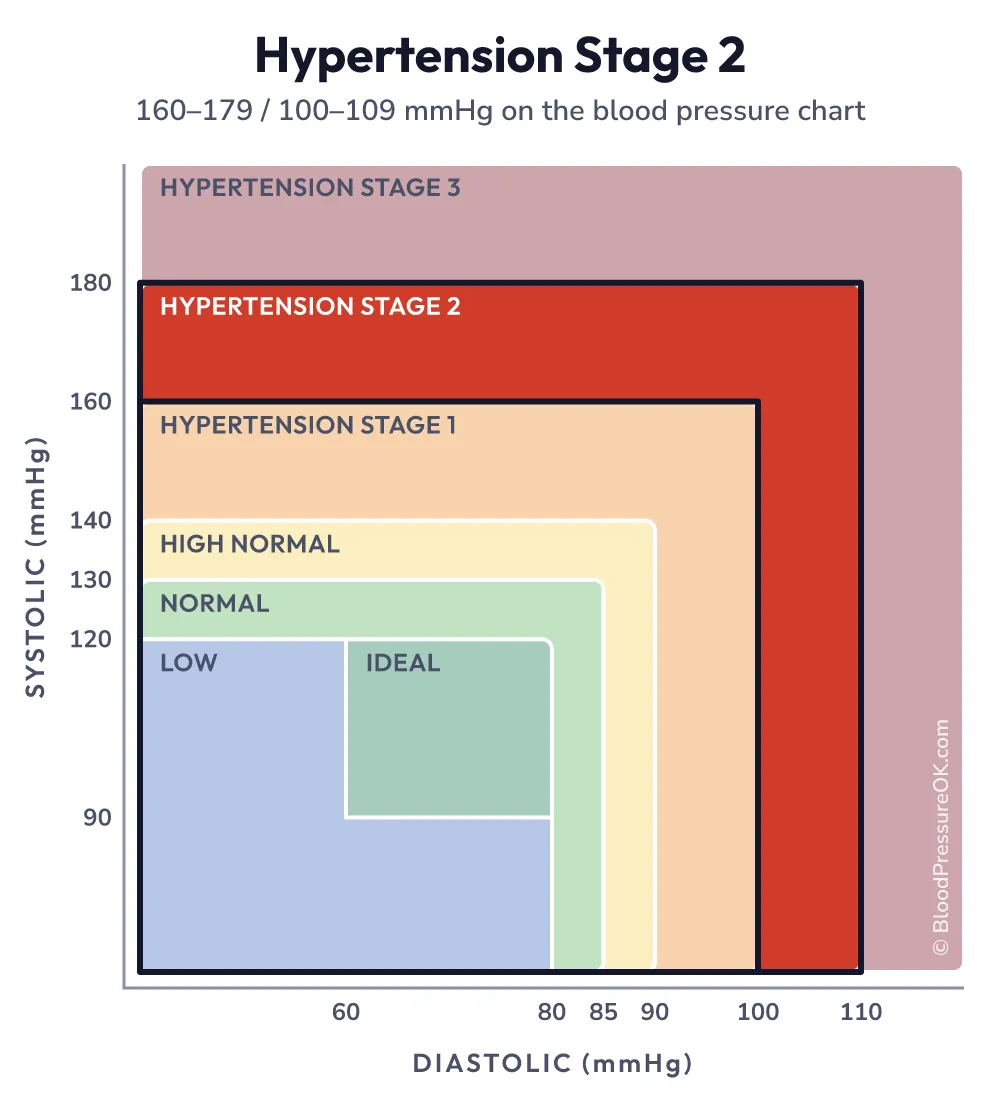
Hypertension stage 2 (grade 2) means a blood pressure of 160–179 systolic and/or 100–109 diastolic. At this level the strain on the heart, brain, kidneys and arteries is substantial, and guidelines recommend starting medication promptly, together with lifestyle changes. Without warning symptoms it is not an emergency, but you should see a doctor within the next few weeks, not months.
What this range means
A reading is grade 2 when the systolic value is 160–179 and/or the diastolic value is 100–109, and neither is higher. Examples are 165/102 and 170/95. As always, one value in a higher category is enough to put the reading there.
Many people with grade 2 hypertension feel completely well. Feeling fine is not a sign that the blood pressure is harmless; the damage builds up silently over years.
Call 911 (US) or your local emergency number right away if a high reading comes with chest pain, shortness of breath, back pain, numbness or weakness, vision changes or difficulty speaking. These can be signs of a heart attack, stroke or other emergency, whatever the exact reading.
International vs US view
| Reading | International (ESH 2023) | US (AHA/ACC 2017, confirmed 2025) |
|---|---|---|
| 160–179 / 100–109 | Grade 2 hypertension | Stage 2 hypertension |
| 140–159 / 90–99 | Grade 1 hypertension | Stage 2 hypertension |
In the US, everything from 140/90 upward is stage 2, so the US label does not distinguish between grade 1 and grade 2. Both systems recommend medication at this level.
How quickly to act
- Repeat the measurement after resting quietly for five minutes. If it stays in this range, make an appointment with your doctor within the next few weeks.
- Measure at home morning and evening until the appointment and bring the readings. See measuring blood pressure correctly.
- If you already take blood pressure medication, tell your doctor soon; the treatment probably needs adjusting. Do not change the dose on your own.
Treatment: usually medication right away
Unlike grade 1, guidelines do not recommend waiting several months to see whether lifestyle changes are enough. For most people with confirmed grade 2 hypertension, medication starts straight away.
Current guidelines favor starting with two drugs combined in a single pill, for example an ACE inhibitor or angiotensin receptor blocker (ARB) together with a calcium channel blocker or a thiazide-type diuretic. Low doses of two drugs work better and cause fewer side effects than a high dose of one, and a single pill makes daily intake easier. The aim is to reach the target within about three months.
Treatment works: in large analyses of clinical trials, every 10 mmHg reduction in systolic pressure lowered the risk of major cardiovascular events by about 20% and the risk of stroke by about a quarter.
Side effects are usually mild, for example ankle swelling with calcium channel blockers or a dry cough with ACE inhibitors. If something bothers you, ask your doctor about an alternative instead of stopping.
Tests your doctor will do
- Blood tests: kidney function, sodium and potassium, blood sugar, cholesterol
- Urine test for protein, an early sign of kidney damage
- ECG, sometimes an ultrasound of the heart
- A search for secondary causes, such as sleep apnea, hormone disorders or medications that raise blood pressure. See risk factors for high blood pressure.
Lifestyle still matters
Lifestyle changes do not replace medication at this level, but they add to it and can mean fewer or lower-dose drugs. Eating less salt, following a DASH-style diet, regular exercise, losing excess weight and drinking less alcohol each lower systolic pressure by several mmHg. See 5 Quick and Easy Ways to Lower Your Blood Pressure and salt and blood pressure.
Related: hypertension stage 1 (grade 1), hypertension stage 3 (grade 3).
Reader questions
Selected from questions readers asked on this page, shortened and anonymized. Answers by the BloodPressureOK editorial team — general information, not a personal diagnosis.
My reading is in stage 2 and I have a headache. Is this an emergency?
Usually not, but some symptoms change that. Call 911 (US) or your local emergency number if a high reading comes with chest pain or pressure, shortness of breath, pain in the back, jaw or throat, sudden numbness or weakness on one side, trouble speaking, confusion, or new vision problems. These can signal a heart attack, stroke or aortic problem, and the exact number matters less than the symptoms. A mild headache, flushing or feeling tense with a reading around 160–179/100–109 is common and is not, on its own, a sign of damage happening right now. Sit quietly for five minutes and measure again. If the reading reaches 180/110 or more without symptoms, contact your doctor the same day. Otherwise, arrange an appointment within the next few weeks and keep a log until then.
The ER lowered my very high reading only a little and sent me home. Shouldn't it have been brought down to normal?
Not necessarily. When blood pressure has been high for a while, the blood vessels in the brain, heart and kidneys adjust to it. Lowering it very fast can briefly reduce blood flow to these organs, which can itself cause harm, including stroke. That is why, without signs of acute organ damage, doctors bring a very high reading down gradually over hours to days, usually with tablets rather than injections. The same applies when you start a new prescription: most blood pressure medicines begin to work within days, but their full effect takes two to four weeks, and the aim is to reach the target within about three months. What matters after such a visit is a follow-up with your own doctor within days to a week, and going back right away if warning symptoms appear.
Can I take an extra pill when my reading is high?
Not unless your doctor has given you a written plan for exactly that. Extra doses taken on your own can push blood pressure too low a few hours later, causing dizziness, falls or fainting, and some medicines can also affect kidney function and potassium levels when the dose jumps. Never take tablets prescribed for someone else, even the same drug. Single high readings are common, especially when you are stressed, in pain or measuring repeatedly; what guides treatment is the average over several days. If your readings stay in stage 2 despite medication, call your doctor or pharmacist soon and bring a log. If a very high reading comes with warning symptoms, call 911 (US) or your local emergency number instead of reaching for more pills.
I take blood pressure medication but still have stage 2 readings. Why?
There are several common reasons, and most can be fixed. First check the basics: is the medication taken every day, are you measuring correctly with the right cuff size, and are home readings also high or only those at the doctor's office? Next, look for things that work against treatment: a lot of salt, regular alcohol, painkillers such as ibuprofen or naproxen, decongestants, energy drinks, weight gain and poor sleep. Untreated sleep apnea is a frequent hidden cause. Hormone disorders, especially an excess of the hormone aldosterone, are more common in people whose blood pressure stays high on several drugs than many realize. If blood pressure remains above target despite three medicines including a diuretic, doctors call it resistant hypertension and usually look for such causes. Do not stop or change your medicines on your own; bring your readings to your doctor.
Can a cold, pain or other medicines push my blood pressure up?
Yes. Pain, fever, infection, stress and lack of sleep all raise blood pressure temporarily. Some medicines do too, including anti-inflammatory painkillers (ibuprofen, naproxen), decongestants in cold and flu remedies (pseudoephedrine, phenylephrine), steroid tablets such as prednisone, some migraine and antidepressant drugs, stimulants, and hormonal contraceptives. Antibiotics do not lower blood pressure and generally do not raise it. If your readings rose during an illness, keep measuring and recheck once you have recovered; if they stay high, your treatment may need adjusting. Always tell your doctor and pharmacist that you have high blood pressure before taking a new medicine, including over-the-counter cold remedies. Ask for alternatives rather than stopping a prescribed drug on your own.
Can natural remedies or breathing exercises replace medication at this level?
Not reliably. Slow breathing and relaxation can lower a reading by a few mmHg for a while, which is why a second reading after resting is often lower, but the effect does not last. Remedies such as apple cider vinegar, lemon juice or cayenne pepper have no good evidence of lowering blood pressure in a meaningful way. At stage 2, guidelines recommend medication for most people because the risk of stroke and heart attack is substantial and treatment clearly reduces it. Lifestyle changes still matter a great deal: eating less salt, a DASH-style diet, regular exercise, weight loss and less alcohol can each lower systolic pressure by several mmHg and may mean fewer or lower-dose medicines over time. For the evidence on specific remedies, see natural remedies for high blood pressure.
I'm a teenager or young adult with stage 2 readings. How serious is that?
It needs proper medical attention, even if you feel well. First make sure the reading is real: use an upper-arm monitor with the right cuff size, rest five minutes, and repeat over several days. From age 13, the same adult thresholds are used in the US; younger children are judged by percentile charts. In young people, high blood pressure more often has a specific cause than in older adults, for example kidney disease, a narrowing of the main artery (coarctation of the aorta), hormone disorders, sleep apnea, or substances such as energy drinks, nicotine, stimulant medicines, decongestants or hormonal contraceptives. Guidelines therefore recommend testing for underlying causes in younger patients, especially at higher readings. If you are already on treatment and readings stay high, tell your doctor soon; medicines often need adjusting in the first weeks.
Only my top number is in stage 2; the bottom number is normal. Does it still count?
Yes. A reading such as 176/80 is stage 2 because the higher category always counts. A high systolic value with a normal or low diastolic value is called isolated systolic hypertension. It is the most common form in people over 60, where it reflects stiffened arteries, and it is a strong predictor of stroke and heart disease, so it is treated like any other stage 2 hypertension. In some young, tall and active people, a high systolic value at the arm can partly reflect how the pressure wave amplifies on its way from the heart, but it still needs confirming with repeated readings and following up with a doctor. See how age affects blood pressure.
Example readings in this category
- 127/100
- 130/100
- 133/100
- 136/100
- 139/100
- 142/100
- 145/100
- 148/100
- 151/100
- 154/100
- 157/100
- 160/100
- 163/102
- 166/104
- 169/106
- 172/108
- 175/108
- 178/108
Check a blood pressure reading
Related guides
- Ideal Blood Pressure (Below 120/80): What It Means
- Normal Blood Pressure (120–129 / 80–84)
- High Normal Blood Pressure (130–139 / 85–89)
- Hypertension Stage 1 (140–159 / 90–99): What to Do
- Hypertension Stage 3 (180/110 and Above): Act Now
- Low Blood Pressure (Hypotension): Below 90/60
- Measuring Blood Pressure Correctly: Step by Step
- 5 Quick and Easy Ways to Lower Your Blood Pressure
Sources: ESH 2023 guideline · AHA/ACC 2025 guideline · MedlinePlus: High blood pressure.
General information, not medical advice. Talk to your doctor before changing your diet, exercise or medication. A reading of 180/110 or higher with chest pain, shortness of breath, back pain, numbness or weakness, vision or speech problems, confusion or a severe headache is an emergency: call 911 (US) or your local emergency number.