How Does Salt Affect Blood Pressure?
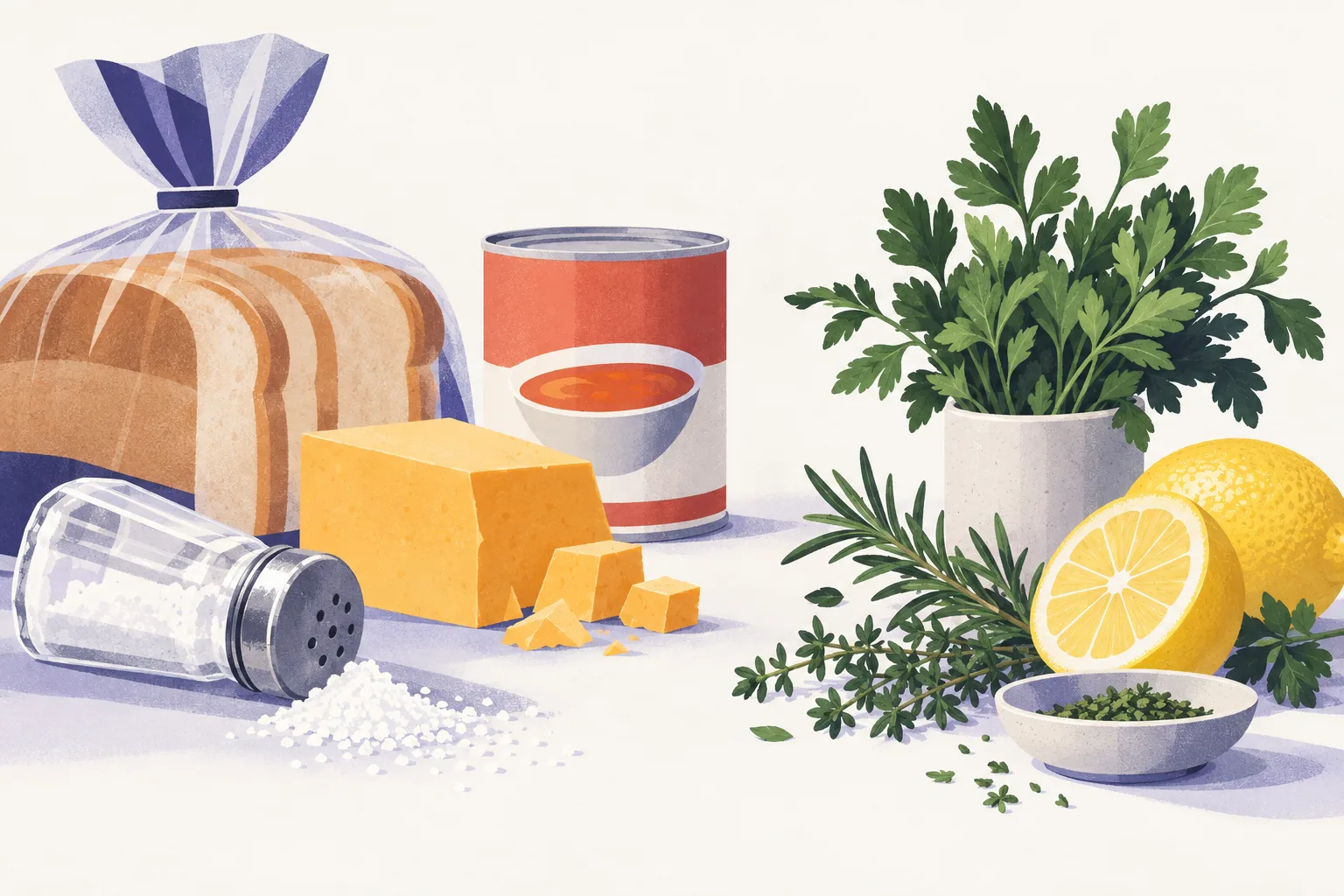
Salt is one of the best-studied influences on blood pressure. Most people eat about twice as much as recommended, and most of it comes from foods they never salt themselves. Cutting back lowers blood pressure noticeably, especially in people who already have hypertension.
Salt or sodium?
Table salt is sodium chloride. It is the sodium that affects blood pressure. Food labels in the US list sodium in milligrams; labels in many other countries list salt in grams. To convert:
- 2.5 g of salt contains about 1 g (1,000 mg) of sodium
- 1 g of sodium equals about 2.5 g of salt
- one level teaspoon of salt (about 6 g) contains about 2,300 mg of sodium
How sodium raises blood pressure
When you eat a lot of sodium, the body holds on to extra water to keep the sodium concentration in the blood stable. More fluid in the blood vessels means higher pressure. Over time, a high sodium intake also makes arteries stiffer and affects the nervous system and hormones that control blood pressure. Healthy kidneys can excrete extra sodium, but this ability declines with age and in kidney disease.
How much is recommended?
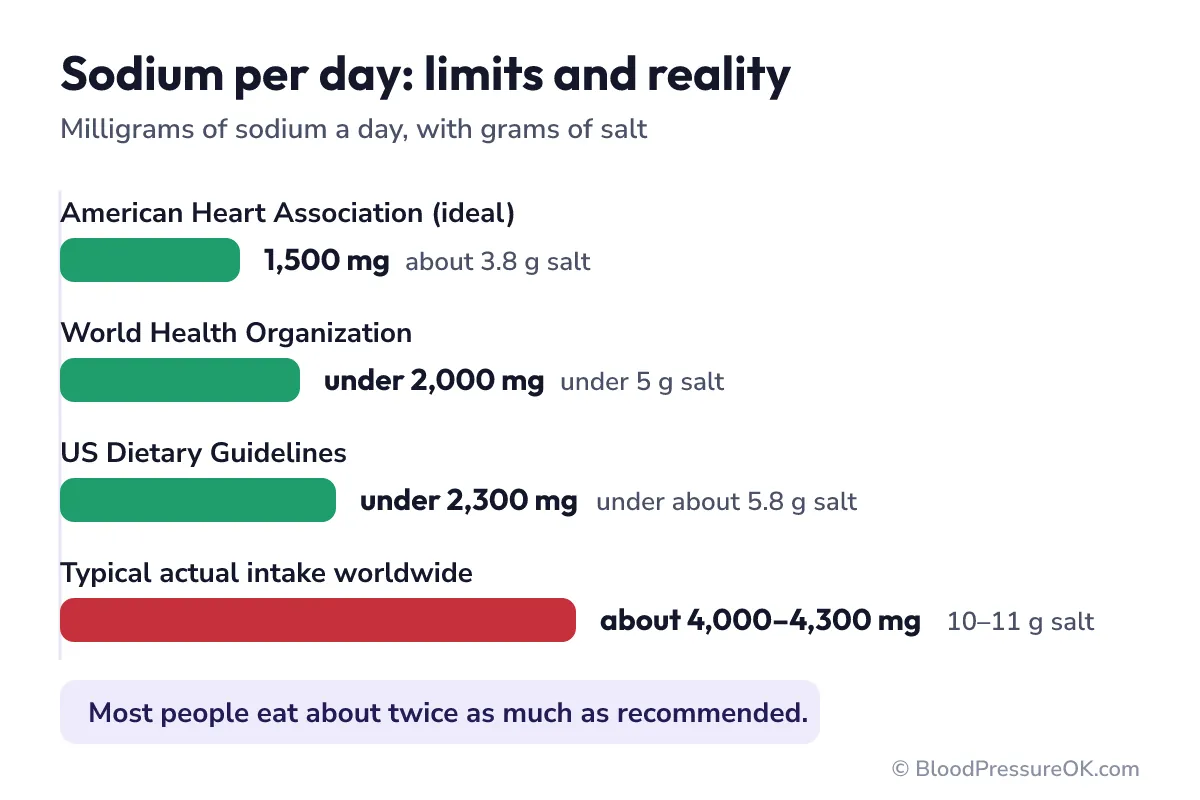
| Recommendation | Salt per day | Sodium per day |
|---|---|---|
| World Health Organization | less than 5 g | less than 2,000 mg |
| US Dietary Guidelines | less than about 5.8 g | less than 2,300 mg |
| American Heart Association (ideal, especially with high blood pressure) | about 3.8 g | 1,500 mg |
| Typical actual intake worldwide | about 10–11 g | about 4,000–4,300 mg |
How much does cutting back help?
In people with high blood pressure, eating less sodium lowers systolic pressure by about 5 to 6 mmHg. In people with normal blood pressure, the effect is smaller, about 2 to 3 mmHg, but still useful for prevention. Even reducing intake by 1,000 mg of sodium a day helps if the ideal target seems out of reach. Combined with a DASH-style diet, the effects add up.
Salt sensitivity
Not everyone reacts to salt equally. Blood pressure responds more strongly to salt in:
- older adults
- people who already have high blood pressure
- people of African descent
- people with diabetes, chronic kidney disease or obesity
There is no simple test for salt sensitivity, so the general advice applies to everyone.
Where the hidden salt is
In the US and many Western countries, about 70% of sodium comes from packaged and restaurant food, not from the salt shaker. Major sources include:
- bread and rolls (not very salty per slice, but eaten often)
- processed meats: ham, bacon, sausages, salami, deli meats
- cheese
- pizza, sandwiches, burgers and fast food
- canned soups, instant noodles and ready meals
- sauces and seasonings: soy sauce, stock cubes, ketchup, dressings
- salty snacks such as chips, crackers and salted nuts
Check labels and compare brands; sodium content can vary a lot between similar products. On US labels, 5% of the daily value or less per serving is low and 20% or more is high.
Potassium-enriched salt substitutes
Salt substitutes replace part of the sodium chloride with potassium chloride. Potassium itself helps lower blood pressure. In a large trial in rural China with about 21,000 people at high cardiovascular risk, a salt substitute (75% sodium chloride, 25% potassium chloride) used for cooking reduced strokes by 14% and deaths by 12% compared with regular salt.
Caution: potassium-enriched salt is not suitable for everyone. People with chronic kidney disease, and those taking medicines that raise potassium, such as ACE inhibitors, angiotensin receptor blockers (ARBs), spironolactone or potassium-sparing diuretics, can develop dangerously high potassium levels. Ask your doctor before using a salt substitute.
Practical tips
- Cook more often from fresh ingredients.
- Season with herbs, spices, garlic, lemon and vinegar instead of salt.
- Taste before you salt, and remove the salt shaker from the table.
- Rinse canned beans and vegetables.
- Eat plenty of potassium-rich foods: vegetables, fruit, beans and nuts (unless you have kidney disease).
- Give your taste buds time: after a few weeks, less salty food tastes normal.
See also 5 Quick and Easy Ways to Lower Your Blood Pressure and risk factors for high blood pressure.
Reader questions
Selected from questions readers asked on this page, shortened and anonymized. Answers by the BloodPressureOK editorial team — general information, not a personal diagnosis.
My blood pressure is very low, around 78/53. Will eating more salt raise it?
It may help some people, but only after a doctor has looked at the cause. Extra salt, together with more fluid, increases blood volume and is sometimes recommended for people with symptoms of low blood pressure, especially dizziness on standing. But a reading like 78/53 is clearly low: measure again, and if it is confirmed, or comes with dizziness, fainting or confusion, contact a doctor the same day. It should be checked first because causes such as dehydration, medication, heart problems, anemia or hormone disorders need different treatment. More salt is not suitable for people with high blood pressure at other times, heart failure or kidney disease. If your doctor recommends it, ask how much, as salt tablets and very salty foods can overshoot. See low blood pressure.
Can daily Epsom salt baths raise blood pressure?
There is no good evidence that they do. Epsom salt is magnesium sulfate, not sodium chloride, so it does not contain the sodium that affects blood pressure, and very little of it is absorbed through intact skin. A very hot bath actually tends to lower blood pressure for a while by widening blood vessels, which can cause dizziness when you stand up. If your blood pressure rose when you started a more physically demanding routine, look at other explanations: pain, poor sleep, stress, and especially anti-inflammatory painkillers such as ibuprofen or naproxen taken for aches, which can raise blood pressure and cause fluid retention. Weight gain with swelling should be checked by a doctor, as it can have causes related to the heart, kidneys or medicines.
I eat a lot of salt on a low-carb diet and my blood pressure is fine. Is the salt warning wrong?
Not for the population as a whole, but people do differ. Salt sensitivity varies a lot: some people's blood pressure rises clearly with salt, while in others the change is small. Low-carb and ketogenic diets also make the kidneys excrete more sodium and water, especially in the first weeks, and the weight loss that often follows lowers blood pressure on its own. So a normal reading on such a diet does not show that salt is harmless for everyone. Sugar matters too: sugary drinks are linked to weight gain and higher blood pressure. Salt sensitivity often increases with age, so if you keep a high salt intake, check your blood pressure regularly over the years.
I have kidney failure and my blood pressure shoots up after salty meals. Why?
When the kidneys fail, the body can no longer remove extra sodium and water. A salty meal makes you thirsty, the fluid you drink stays in the body, and blood volume and blood pressure rise until the next dialysis session removes it. That is why people on dialysis receive strict limits for both sodium and fluid, and why weight gain between sessions is watched closely. Restaurant meals, soups, sauces and processed foods are often the biggest sources. Ask your kidney team or a renal dietitian for a personal plan, and avoid potassium-based salt substitutes unless they approve them, as potassium can build up dangerously. Very high readings with chest pain, breathlessness, severe back pain or confusion require a call to 911 (US) or your local emergency number.
Check a blood pressure reading
Related guides
- How Does Age Affect Blood Pressure?
- How Does Alcohol Affect Blood Pressure?
- How Does Coffee Affect Blood Pressure?
- How Does Smoking Affect Blood Pressure?
- How Does Exercise Affect Blood Pressure?
- Measuring Blood Pressure Correctly: Step by Step
- 5 Quick and Easy Ways to Lower Your Blood Pressure
Sources: ESH 2023 guideline · AHA/ACC 2025 guideline · WHO: Hypertension fact sheet.
General information, not medical advice. Talk to your doctor before changing your diet, exercise or medication. A reading of 180/110 or higher with chest pain, shortness of breath, back pain, numbness or weakness, vision or speech problems, confusion or a severe headache is an emergency: call 911 (US) or your local emergency number.