How Does Smoking Affect Blood Pressure?

Every cigarette raises blood pressure and heart rate for a while. Over years, smoking damages the arteries and multiplies the harm done by high blood pressure. Quitting is one of the most effective things a person with hypertension can do for their heart, even if the effect on the blood pressure reading itself is modest.
What happens when you smoke
Nicotine reaches the brain within seconds and triggers the release of adrenaline and noradrenaline. These stress hormones:
- narrow the blood vessels
- make the heart beat faster and harder
- raise blood pressure, typically by several mmHg and sometimes by 10 mmHg or more
The rise lasts roughly 15 to 30 minutes after each cigarette. In someone who smokes regularly through the day, blood pressure can therefore stay raised for much of the waking hours. Carbon monoxide in the smoke reduces the oxygen the blood can carry, so the heart has to work harder at the same time.
Smoking and blood pressure readings
Because the effect is short-lived, a smoker who has not smoked for an hour before a doctor's visit may have a normal office reading while their daytime blood pressure is actually high. This is called masked hypertension. Home measurements or 24-hour monitoring give a more realistic picture. For an accurate reading, do not smoke in the 30 minutes before measuring. See measuring blood pressure correctly.
The long-term damage
Population studies do not show that smokers always have higher resting blood pressure, partly because smokers tend to weigh less. But smoking harms the arteries in other ways:
- it damages the inner lining of blood vessels (the endothelium)
- it makes arteries stiffer, which raises systolic pressure over time
- it speeds up atherosclerosis (fatty plaques) and makes blood more likely to clot
High blood pressure and smoking together multiply the risk of heart attack, stroke, peripheral artery disease and aortic aneurysm. Smoking is also linked to more severe forms of hypertension and to faster loss of kidney function.
Vaping, heated tobacco and other nicotine products
E-cigarettes and heated tobacco products expose you to fewer toxic substances than cigarettes, but the nicotine still causes the same short-term rise in blood pressure and heart rate. They are not harmless. For a smoker who cannot quit otherwise, switching completely may reduce harm, but the goal should be to stop nicotine altogether. Chewing tobacco and snuff also deliver nicotine, and some products contain a lot of sodium. Secondhand smoke raises the risk of heart disease in non-smokers too.
What quitting does
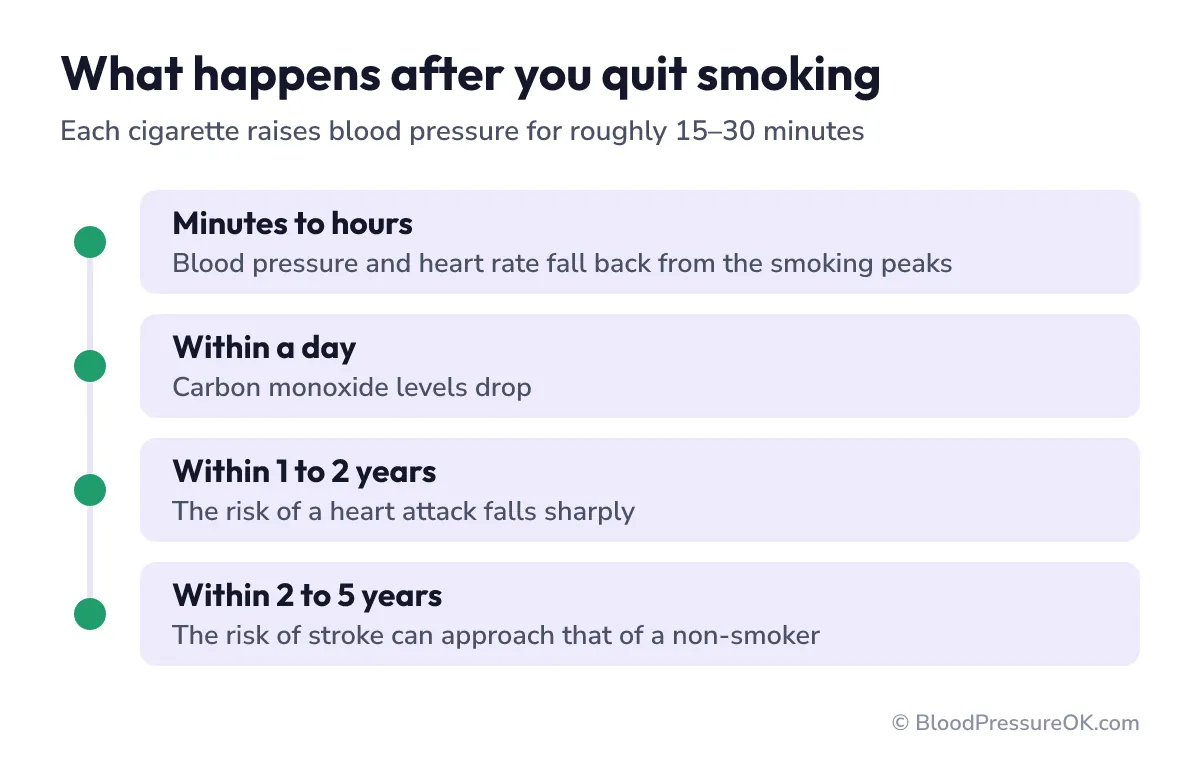
- Within minutes to hours: blood pressure and heart rate fall back from the peaks caused by smoking; carbon monoxide levels drop within a day.
- Within one to two years: the risk of a heart attack falls sharply.
- Within two to five years: the risk of stroke can approach that of a non-smoker.
Some people gain a few kilograms after quitting, which may raise blood pressure slightly. The benefits of quitting far outweigh this, and regular exercise and a healthy diet help limit weight gain.
How to quit successfully
- Get help: counseling, quitlines and apps roughly double your chances compared with quitting alone.
- Use medication: nicotine replacement (patches, gum, lozenges), varenicline or bupropion improve success rates further. Nicotine replacement is generally considered safe for people with high blood pressure. Bupropion can occasionally raise blood pressure, so your doctor will check it.
- Set a date and remove cigarettes, lighters and ashtrays from your home and car.
- Plan for triggers such as coffee, alcohol and stress, and have alternatives ready.
- Do not give up after a relapse; most people need several attempts before they quit for good.
See also: risk factors for high blood pressure, 5 Quick and Easy Ways to Lower Your Blood Pressure and why does my chest hurt?.
Check a blood pressure reading
Related guides
- How Does Age Affect Blood Pressure?
- How Does Alcohol Affect Blood Pressure?
- How Does Coffee Affect Blood Pressure?
- How Does Salt Affect Blood Pressure?
- How Does Exercise Affect Blood Pressure?
- Measuring Blood Pressure Correctly: Step by Step
- 5 Quick and Easy Ways to Lower Your Blood Pressure
Sources: ESH 2023 guideline · AHA/ACC 2025 guideline · WHO: Hypertension fact sheet.
General information, not medical advice. Talk to your doctor before changing your diet, exercise or medication. A reading of 180/110 or higher with chest pain, shortness of breath, back pain, numbness or weakness, vision or speech problems, confusion or a severe headache is an emergency: call 911 (US) or your local emergency number.