Hypertension Stage 1 (140–159 / 90–99): What to Do

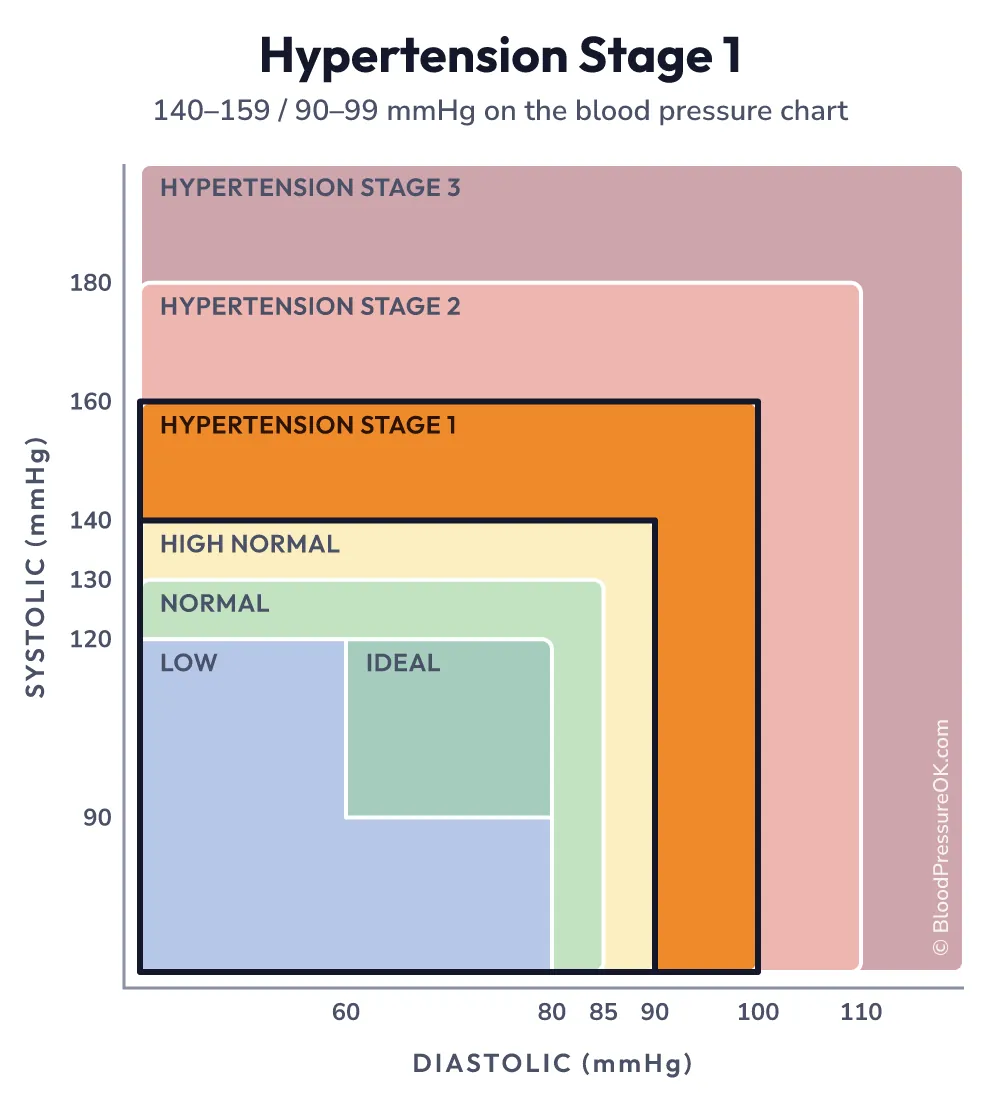
Hypertension stage 1 (grade 1) means a blood pressure of 140–159 systolic and/or 90–99 diastolic. It is the most common form of high blood pressure and usually causes no symptoms. It is not an emergency, but it is a real diagnosis that deserves attention, because over years it damages the heart, brain, kidneys and arteries.
What this range means
A reading falls into grade 1 when the systolic value is 140–159 and/or the diastolic value is 90–99, and neither is higher. Examples are 145/92 and 150/85. When the systolic value is 140 or more but the diastolic stays below 90, doctors call it isolated systolic hypertension; it is especially common in older adults.
Worldwide, about 1.3 billion adults have hypertension, and many do not know it. Most have no symptoms at all; headaches or nosebleeds are not reliable signs. See warning signs of hypertension.
Step 1: confirm the diagnosis
One high reading is not a diagnosis. Blood pressure measured in a doctor's office is often higher than usual (the "white-coat effect"). Guidelines therefore recommend confirming it:
- Home measurements: two readings in the morning and two in the evening for about seven days. An average of 135/85 or more confirms hypertension. See measuring blood pressure correctly.
- 24-hour monitoring: a portable cuff measures automatically during the day and night. A 24-hour average of 130/80 or more confirms hypertension.
Your doctor will also check for causes and for early damage: blood tests (kidney function, potassium, blood sugar, cholesterol), a urine test for protein and an ECG.
International vs US view
| Reading | International (ESH 2023) | US (AHA/ACC 2017, confirmed 2025) |
|---|---|---|
| 140–159 / 90–99 | Grade 1 hypertension | Stage 2 hypertension |
| 130–139 / 80–89 | High normal or normal | Stage 1 hypertension |
So a reading that this site calls stage 1 (grade 1) is stage 2 in the US system. The practical advice is similar in both.
Step 2: lifestyle changes
For everyone with grade 1 hypertension, lifestyle changes are the foundation of treatment. Approximate systolic reductions in people with hypertension:
- DASH-style diet rich in vegetables, fruit and whole grains: about 11 mmHg
- Less sodium: 5–6 mmHg (see salt and blood pressure)
- Regular aerobic exercise: 5–8 mmHg (see exercise and blood pressure)
- Weight loss: about 1 mmHg per kg (2.2 lb) lost
- Less alcohol: about 4 mmHg (see alcohol and blood pressure)
Combined, these can bring grade 1 hypertension back into the normal range.
Step 3: when medication starts
According to the European guideline:
- Low to moderate risk: start with lifestyle changes. If blood pressure is still 140/90 or higher after 3 to 6 months, medication is recommended.
- Start medication right away if you have high cardiovascular risk, existing heart disease or stroke, diabetes, chronic kidney disease, or signs of organ damage such as a thickened heart muscle or protein in the urine.
Common first choices are ACE inhibitors, angiotensin receptor blockers (ARBs), calcium channel blockers and thiazide-type diuretics. In people over 80, doctors may wait until the systolic value reaches 160 and adjust treatment to overall health.
Treatment targets
The first goal is below 140/90. For most people who tolerate treatment well, the European guideline then aims for below 130/80; the US target is below 130/80 as well. Older and frail people may have more relaxed targets.
What to do now
- Measure at home for a week and bring the results to your doctor.
- Start with one or two lifestyle changes you can keep up. See 5 Quick and Easy Ways to Lower Your Blood Pressure.
- If medication is prescribed, take it every day, even when you feel fine.
If your readings rise further, see hypertension stage 2 (grade 2).
Reader questions
Selected from questions readers asked on this page, shortened and anonymized. Answers by the BloodPressureOK editorial team — general information, not a personal diagnosis.
My top number is normal but my bottom number is in the 90s. Why, and does it count?
It counts. A reading such as 120/96 is stage 1 because the higher category always applies. A raised diastolic value with a normal systolic value is called isolated diastolic hypertension. It is most common in adults under about 50 and is often linked to excess weight, regular alcohol, little physical activity, high salt intake and sleep apnea. Its long-term risk is smaller than that of a raised systolic value, but it is real, particularly in younger people, and it often turns into combined high blood pressure over the years. The first steps are the same as for any stage 1 reading: confirm it with a week of home measurements, then work on weight, salt, alcohol and exercise. Wine does not help; regular drinking raises blood pressure.
Can I bring stage 1 blood pressure down without medication?
Often, yes, if your overall cardiovascular risk is low to moderate. Guidelines give most people with confirmed stage 1 hypertension three to six months of lifestyle changes before medication is considered. The changes with the best evidence are a DASH-style diet, eating less salt, regular aerobic exercise, losing excess weight and drinking less alcohol; quitting smoking does not lower the reading much but greatly lowers overall risk. Combined, they can bring readings back into the normal range, even with a strong family history. Measure at home regularly so you can see whether it is working. If you have diabetes, kidney disease, heart disease or signs of organ damage, or your readings are still 140/90 or higher after a few months, medication is recommended, and needing it is not a failure.
Once I start blood pressure pills, am I on them for life?
Not necessarily, but often for a long time. Blood pressure medicines are not addictive, and your body does not become dependent on them. The reason many people take them for years is that high blood pressure itself is usually a lasting condition: when the medicine is stopped, readings tend to return to where they were. Some people who lose a lot of weight, cut down on alcohol and salt, and exercise regularly can reduce their dose or stop a medicine, but only with their doctor and with careful home monitoring afterwards. Never stop on your own; some drugs, such as beta-blockers and clonidine, can cause a rebound rise in blood pressure and heart rate if stopped suddenly.
My readings are high at the dentist, the plasma center or an insurance check, but normal at my doctor's office. Which is right?
Possibly both. Blood pressure rises with anxiety, pain, rushing to an appointment and talking, so readings taken in unfamiliar or stressful settings are often higher; this is called the white-coat effect. The reverse also happens: some people have normal office readings but high values at home or during the day (masked hypertension). The best way to find out is a week of home readings taken correctly, or a 24-hour monitor that also records your blood pressure during sleep. A home average of 135/85 or more confirms hypertension. Bring your log to your doctor. Even if the high readings turn out to be situational, people with a strong white-coat effect develop lasting hypertension more often, so keep checking every few months.
I'm very fit and exercise a lot. How can I have stage 1 readings?
Regular exercise lowers blood pressure on average, but it does not make you immune to genes, age or other influences. Before accepting the diagnosis, check a few things that commonly affect athletes: a cuff that is too small for a muscular upper arm gives falsely high readings; pre-workout products, energy drinks and caffeine pills raise blood pressure; regular use of anti-inflammatory painkillers raises it too; and measuring soon after training gives misleading results. Take home readings on rest days, seated and relaxed, with the right cuff size. A low diastolic value and a slow pulse are common in trained people and are not a concern on their own. If your home average is still 135/85 or higher, discuss it with your doctor, who may also check your heart with an ECG.
Can I still drink alcohol with stage 1 hypertension?
You can, but less is better. Regular drinking raises blood pressure in a dose-dependent way, and cutting back lowers systolic pressure by around 4 mmHg on average, more in heavy drinkers, within a few weeks. For people with high blood pressure, US guidelines set an upper limit of two drinks a day for men and one for women; the European guideline advises less than 14 units a week for men and less than 8 for women. These are limits, not targets. Avoid binge drinking, plan alcohol-free days, and be aware that alcohol can add to the effect of some blood pressure medicines and cause dizziness. More in alcohol and blood pressure.
My readings jump around: high one minute, normal the next, and higher in the evening. Which one is right?
None of them alone. Blood pressure changes constantly with activity, emotions, meals, temperature and the time of day, and swings of 10 to 20 mmHg between readings are normal. The first reading of a series is often the highest, which is why guidelines recommend taking two readings a minute apart and using the average. Readings are often lowest during sleep, rise in the morning and can be higher in the evening after a busy day. Measure twice in the morning and twice in the evening for a week, ignore the first day and average the rest. That average, not any single number, decides whether you have stage 1 hypertension. If anxiety makes you check repeatedly, set fixed times and stick to them.
Are headaches, nosebleeds or a red face caused by stage 1 blood pressure?
Usually not. Stage 1 hypertension rarely causes symptoms, and studies have not found headaches or nosebleeds to be reliable signs of it. Often the link runs the other way: pain, stress and feeling unwell temporarily raise the reading. Flushing has many causes, including heat, alcohol, menopause and some medicines. Still, symptoms deserve attention in their own right. See a doctor if headaches are new, severe or getting worse, if nosebleeds are heavy or frequent (especially if you take blood thinners), or if you have recurring attacks of headache, pounding heartbeat, sweating and sudden spikes in blood pressure, which can occasionally point to a hormone disorder. Call 911 (US) or your local emergency number for a sudden severe headache, weakness, numbness, trouble speaking or chest pain.
Example readings in this category
Check a blood pressure reading
Related guides
- Ideal Blood Pressure (Below 120/80): What It Means
- Normal Blood Pressure (120–129 / 80–84)
- High Normal Blood Pressure (130–139 / 85–89)
- Hypertension Stage 2 (160–179 / 100–109)
- Hypertension Stage 3 (180/110 and Above): Act Now
- Low Blood Pressure (Hypotension): Below 90/60
- Measuring Blood Pressure Correctly: Step by Step
- 5 Quick and Easy Ways to Lower Your Blood Pressure
Sources: ESH 2023 guideline · AHA/ACC 2025 guideline · MedlinePlus: High blood pressure.
General information, not medical advice. Talk to your doctor before changing your diet, exercise or medication. A reading of 180/110 or higher with chest pain, shortness of breath, back pain, numbness or weakness, vision or speech problems, confusion or a severe headache is an emergency: call 911 (US) or your local emergency number.