Normal Blood Pressure (120–129 / 80–84)

A blood pressure of 120–129 systolic and/or 80–84 diastolic is called "normal" in the international (European) classification. It is not a reason to worry, but it is no longer optimal, and in the US the same reading is already labeled "elevated" or even stage 1 hypertension.
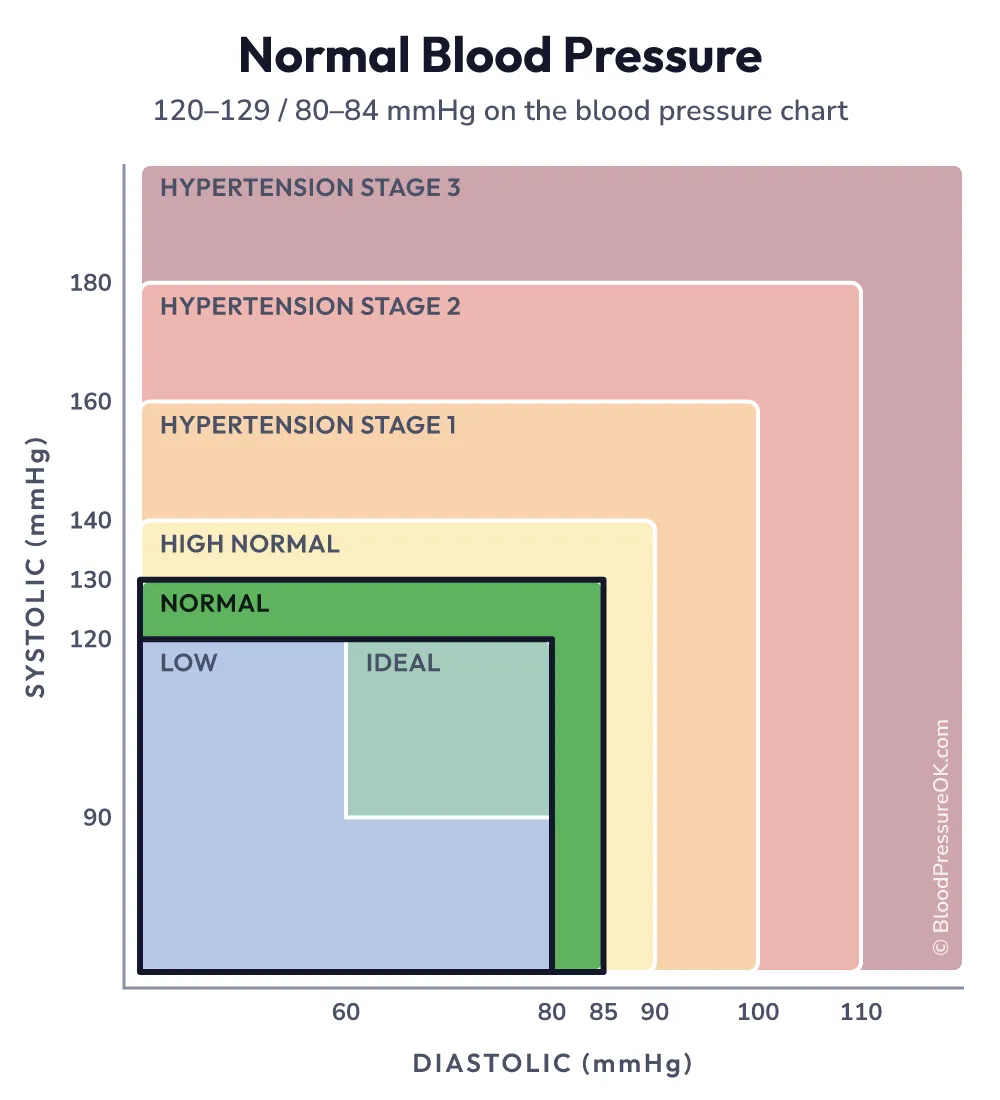
What this range means
A reading falls into this category when the systolic value (the upper number) is 120–129 and/or the diastolic value (the lower number) is 80–84, and neither number is higher. For example, 125/78 and 118/82 are both normal. If one value falls into a higher category, that higher category counts: 125/86 is high normal.
As with every category, what matters is the average of repeated readings taken at rest, not a single measurement. See how to measure correctly.
How risky is it?
The risk of heart attack and stroke rises gradually with blood pressure; there is no sharp line between "safe" and "dangerous". In the normal range the extra risk compared with an optimal reading is small, but it is measurable over decades.
More important is where your blood pressure is heading. In the long-running Framingham Heart Study, about one in six middle-aged adults with normal blood pressure developed hypertension within four years, compared with about one in twenty of those with optimal readings. The risk of progression is higher if you are older, overweight, eat a lot of salt, drink alcohol regularly or have a family history of high blood pressure.
Why the US calls it "elevated"
| Reading | International (ESH 2023) | US (AHA/ACC 2017, confirmed 2025) |
|---|---|---|
| 120–129 and below 80 | Normal | Elevated |
| Diastolic 80–84 | Normal | Stage 1 hypertension |
The US guideline uses lower thresholds to signal risk earlier. The difference is mainly about labels: in both systems, people with readings in this range and no other problems are advised to improve their lifestyle, not to take medication. In the US, someone with a diastolic value of 80–84 and stage 1 hypertension is only offered medication if their overall cardiovascular risk is high, for example with existing heart disease, diabetes or kidney disease.
What to do
No treatment is needed. This is, however, the right moment to make changes that keep blood pressure from rising further:
- Eat less salt. Cutting back on processed and restaurant food is the quickest way. See salt and blood pressure.
- Eat more vegetables, fruit, legumes, nuts and whole grains. The DASH diet, built on these foods, lowered blood pressure even in people without hypertension.
- Move regularly: brisk walking, cycling or swimming for about 150 minutes a week, plus some strength training. See exercise and blood pressure.
- Lose excess weight: every kilogram (2.2 lb) lost lowers blood pressure by about 1 mmHg.
- Limit alcohol and do not smoke.
Check your blood pressure at least every three years, or every year if you have other risk factors such as diabetes, high cholesterol, excess weight or a family history of heart disease. See risk factors for high blood pressure.
When to talk to a doctor
A reading in the normal range does not require a doctor's visit on its own. Talk to your doctor if:
- your home readings are creeping up over months or years
- you have diabetes, kidney disease or have had a heart attack or stroke, as targets are stricter for you
- you are pregnant, as blood pressure is followed closely during pregnancy
Next category up: high normal blood pressure. For simple first steps, see 5 Quick and Easy Ways to Lower Your Blood Pressure.
Reader questions
Selected from questions readers asked on this page, shortened and anonymized. Answers by the BloodPressureOK editorial team — general information, not a personal diagnosis.
I've lost weight and my reading is now around 121/74. Is that good?
Yes, that is a good result. A reading like 121/74 is at the very bottom of the normal range, just above optimal. Weight loss is one of the most effective ways to lower blood pressure: on average, every kilogram (2.2 lb) lost lowers it by about 1 mmHg, and losing weight around the waist seems to matter most. The challenge now is keeping it there. Regular physical activity helps prevent weight regain and lowers blood pressure on its own. If you take blood pressure medication and your readings keep falling, or you feel dizzy when standing up, tell your doctor, as the dose may need adjusting. Do not stop or change it on your own.
Is 130/85 still normal?
No. A reading of 130/85 is high normal in the international classification used on this site, and in the US system it already counts as stage 1 hypertension. The older US term "prehypertension" covered roughly the same range. It is not a reason for alarm or, in most people, for medication, but it is the right moment for lifestyle changes: eating less salt, more vegetables and fruit, regular exercise, losing excess weight and drinking less alcohol. Confirm the reading with a week of home measurements, because a single value can be off by 10 mmHg in either direction. If your home average stays at 135/85 or higher, see your doctor. More in high normal blood pressure.
My reading is normal in the morning but much higher in the evening. Which one counts?
Both, averaged. Blood pressure follows a daily rhythm: it is usually lowest during sleep, rises in the morning, and can be higher later in the day after work, meals, coffee or stress. Guidelines recommend measuring twice in the morning and twice in the evening for about a week and using the average of all readings except those from the first day. If evening readings are regularly much higher, look at what happens before you measure, such as rushing, a meal, alcohol or caffeine. If you were prescribed blood pressure medicine and stopped it, rising readings are a common reason; speak to your doctor about restarting or switching rather than deciding alone, and bring your log of readings to that appointment.
My blood pressure has been high for days but my pulse is normal. What does that mean?
Blood pressure and pulse are related but measure different things. Pulse is how often the heart beats; blood pressure is the force of blood against the artery walls. Blood pressure can be high with a perfectly normal pulse, and in fact most people with high blood pressure have a normal heart rate. A normal pulse therefore does not mean that high readings are harmless. If your readings have been at 140/90 or above for several days, measured correctly at rest, arrange a visit to your doctor and bring your log. Readings of 180/110 or more should be followed up the same day, and immediately via 911 (US) or your local emergency number if they come with chest pain, shortness of breath, weakness, numbness or trouble speaking.
One of my numbers is normal and the other is high, like 161/83. Which category am I in?
The higher one. Blood pressure is classified by whichever value falls into the higher category, so 161/83 is stage 2, even though 83 on its own would be normal. A high systolic value with a normal diastolic value is called isolated systolic hypertension. It is the most common form of high blood pressure in older adults and carries a real risk of stroke and heart disease. The same rule works the other way: 118/88 is high normal because of its diastolic value. As with every reading, confirm it with repeated measurements at rest before drawing conclusions, and see your doctor if the higher value is confirmed.
Example readings in this category
Check a blood pressure reading
Related guides
- Ideal Blood Pressure (Below 120/80): What It Means
- High Normal Blood Pressure (130–139 / 85–89)
- Hypertension Stage 1 (140–159 / 90–99): What to Do
- Hypertension Stage 2 (160–179 / 100–109)
- Hypertension Stage 3 (180/110 and Above): Act Now
- Low Blood Pressure (Hypotension): Below 90/60
- Measuring Blood Pressure Correctly: Step by Step
- 5 Quick and Easy Ways to Lower Your Blood Pressure
Sources: ESH 2023 guideline · AHA/ACC 2025 guideline · MedlinePlus: High blood pressure.
General information, not medical advice. Talk to your doctor before changing your diet, exercise or medication. A reading of 180/110 or higher with chest pain, shortness of breath, back pain, numbness or weakness, vision or speech problems, confusion or a severe headache is an emergency: call 911 (US) or your local emergency number.