5 Quick and Easy Ways to Lower Your Blood Pressure
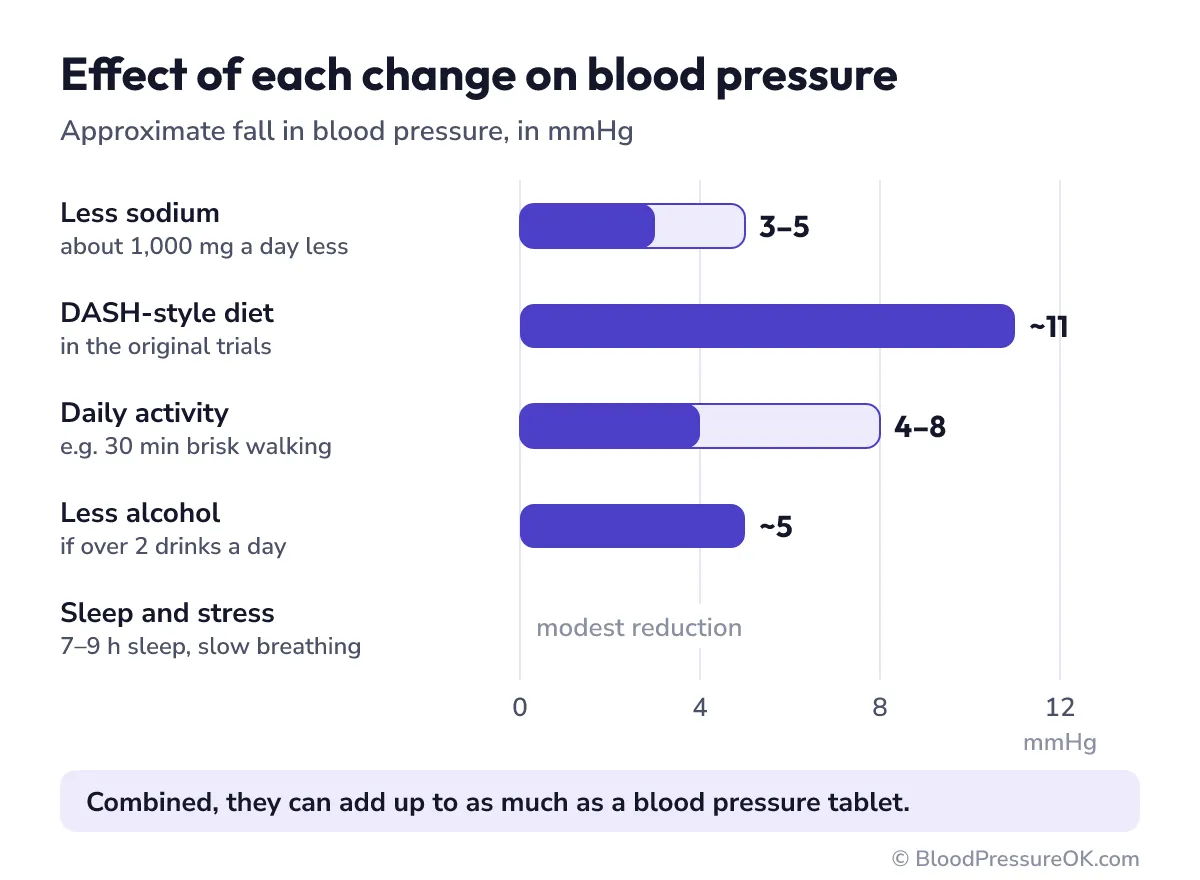
There is no trick that makes high blood pressure disappear overnight, but a handful of everyday changes have solid evidence behind them. Each one lowers systolic pressure by a few mmHg — and together they can add up to as much as a blood pressure tablet. Here are the five that matter most, plus what to do if a single reading suddenly looks high.
1. Cut back on sodium
Salt (sodium chloride) is the best-studied dietary driver of blood pressure. Cutting sodium by around 1,000 mg a day lowers systolic pressure by roughly 3–5 mmHg in people with hypertension. Most sodium does not come from the salt shaker but from bread, cheese, processed meat, ready meals, soups, sauces and restaurant food.
- Read labels and compare products — the differences are often large.
- Cook more at home and season with herbs, lemon, garlic or pepper.
- Aim for less than 2,000–2,300 mg of sodium a day (about one teaspoon of salt).
More background: how salt affects blood pressure.
2. Eat more potassium-rich food (the DASH way)
Potassium helps the kidneys get rid of sodium and relaxes blood vessel walls. The DASH diet (Dietary Approaches to Stop Hypertension) — lots of vegetables, fruit, legumes, nuts, whole grains and low-fat dairy, with little red meat and sugar — lowered systolic pressure by about 11 mmHg in people with hypertension in the original trials. Good potassium sources are beans, lentils, potatoes, leafy greens, tomatoes, bananas, oranges, avocados and yogurt.
If you have kidney disease or take drugs that raise potassium (for example some diuretics, ACE inhibitors or ARBs), ask your doctor before increasing potassium a lot or using potassium-based salt substitutes.
3. Move every day — including isometric exercise
Regular physical activity lowers blood pressure by about 4–8 mmHg. Brisk walking, cycling or swimming for 30 minutes on most days is the classic advice. Newer research shows that isometric exercises — holding a position without movement, such as a wall sit or a hand-grip squeeze, in short sets of about two minutes — are surprisingly effective, sometimes even more so than endurance training. Strength training twice a week adds further benefit. See exercise and blood pressure.
4. Drink less alcohol
Alcohol raises blood pressure in a dose-dependent way. People who drink more than two drinks a day and cut back substantially can lower systolic pressure by around 5 mmHg. Less is better; none is best for blood pressure. Read more about alcohol and blood pressure.
5. Sleep well and manage stress
Short sleep (under six hours), untreated sleep apnea and chronic stress are all linked to higher blood pressure. Aim for seven to nine hours of sleep, and talk to a doctor if you snore loudly or feel tired during the day — treating sleep apnea can lower blood pressure. Slow breathing, meditation and regular breaks can modestly reduce readings. Not smoking matters too: each cigarette raises blood pressure temporarily and damages arteries (see smoking and blood pressure).
What to do right now if a reading is high
A single high number is common and usually not dangerous. Blood pressure goes up with stress, pain, a full bladder, coffee, or simply talking during the measurement.
- Don't panic. Anxiety itself pushes the numbers up.
- Sit quietly for five minutes, back supported, feet flat on the floor, arm resting at heart level.
- Measure again, twice, one minute apart, and note the average. Check your technique in measuring blood pressure correctly.
- If it is still high but you feel well, take your usual medication as prescribed (do not take extra doses on your own) and contact your doctor in the next days. Keep a log of your readings.
- If it stays at 180/110 or higher without symptoms, contact your doctor or an urgent care service the same day. You can look up a reading such as 180/110 on this site.
Call 911 (US) or your local emergency number immediately if a reading of 180/110 or higher comes with chest pain, shortness of breath, back pain, numbness or weakness, problems seeing or speaking, confusion or a sudden severe headache. These can be signs of a hypertensive emergency, heart attack or stroke. Do not wait to see if it goes down, and do not drive yourself.
Keep it realistic
Lifestyle changes work best when combined and kept up over months. They complement — but do not replace — medication your doctor has prescribed. Never stop or change your blood pressure treatment without talking to your doctor first.
Reader questions
Selected from questions readers asked on this page, shortened and anonymized. Answers by the BloodPressureOK editorial team — general information, not a personal diagnosis.
My reading is around 190/115. Is there anything I can do at home to bring it down quickly?
No home method reliably and safely brings a reading this high back to normal, and forcing it down fast is not the goal anyway. Sit quietly for five minutes and measure again with good technique, because stress, pain or a cuff that is too small can inflate the number. If repeated readings stay at 180/110 or higher and you feel well, contact your doctor or an urgent care clinic the same day. If you have no regular doctor, urgent care or an emergency department will see you, so cost should not stop you from getting checked. Call 911 (US) or your local emergency number if the reading comes with chest pain, shortness of breath, back pain, numbness or weakness, trouble seeing or speaking, confusion or a sudden severe headache. The changes on this page work over weeks, not minutes. More in hypertension stage 3.
Will drinking more water lower my blood pressure?
Staying normally hydrated is healthy, but there is no good evidence that drinking extra water lowers blood pressure in people with hypertension, and a few glasses will not fix a high reading. Drinking less is not a strategy either: dehydration makes you feel worse and does not treat hypertension. For some people, extra fluid is actually harmful, for example those with heart failure, advanced kidney disease or swelling treated with water pills. If your doctor has set a fluid limit, follow it. Where water does help is as a swap: replacing soda, sweetened drinks and alcohol with water cuts sugar and calories, and losing excess weight is one of the most effective long-term ways to lower blood pressure, often by roughly 1 mmHg for every kilogram (about 2 pounds) lost.
Do garlic, lemon water, apple cider vinegar, beet juice or tart cherry juice lower blood pressure?
A few of these have some evidence, but none is a treatment on its own. Garlic supplements lowered systolic pressure by several mmHg in small trials, and nitrate-rich beetroot juice can lower it for a few hours. Studies on tart cherry juice are small and mixed, and there is no good evidence that lemon water or apple cider vinegar lowers blood pressure. None of them acts fast or strongly enough to handle a reading in the 160s or 180s, and they do not replace prescribed medication. Some products also carry risks: garlic supplements can add to the effect of blood thinners, licorice raises blood pressure, and grapefruit interacts with some blood pressure drugs. Your overall eating pattern, especially less salt and more potassium, matters far more than any single food. See natural remedies and which tea lowers blood pressure.
Can slow, deep breathing really lower my reading within minutes?
Often by a few points, yes. Breathing slowly, at around six breaths per minute with a long, steady exhale, calms the nervous system and lowers heart rate, so a reading taken afterward is frequently lower. That effect is real but short-lived: it shows what your pressure looks like at rest, it does not treat hypertension. Practiced daily for 10–15 minutes, slow breathing has produced modest reductions in studies, so it is a reasonable addition to the bigger measures on this page. It is also a good way to settle down before measuring if anxiety pushes your numbers up. What does not help is measuring again and again until you get a number you like. Use a fixed routine, record every reading and look at the average.
Should I take an aspirin when my blood pressure is very high?
No. Aspirin does not lower blood pressure. It thins the blood, which helps during some heart attacks but can make things worse if very high pressure has caused bleeding in the brain. Daily low-dose aspirin is also no longer routinely recommended for people who have never had a heart attack or stroke, because the bleeding risk can outweigh the benefit, and uncontrolled blood pressure adds to that risk. Whether aspirin makes sense for you is a decision for your doctor. If a high reading comes with chest pain or other warning signs, call 911 (US) or your local emergency number. The dispatcher can tell you whether to take an aspirin while you wait for help.
I take my medication, but my readings are still high. What should I do?
Do not add extra pills on your own. Instead, collect evidence for your doctor: measure twice in the morning and twice in the evening for a week and bring the log. Common reasons treatment falls short are missed or irregular doses, a dose that is still too low, or needing a second or third drug. Most people with hypertension end up on more than one medicine, often as a single combination pill. Other culprits include salty food, alcohol, weight gain, poor sleep or sleep apnea, and other medicines such as ibuprofen, naproxen or decongestants. If blood pressure stays above target on three drugs, including a diuretic, it is called resistant hypertension, and your doctor may look for a hidden cause such as a hormone or kidney problem. Also check your cuff size and technique.
How long does it take before lifestyle changes or a new medication lower my numbers?
Blood pressure medicines start working within hours to days, but the full effect usually takes two to four weeks. That is why doctors generally wait a few weeks before changing a dose, and why a new tablet that has not worked by the next morning is not a reason to give up on it. Lifestyle changes also need time. Cutting salt and eating the DASH way can show an effect within two to four weeks, cutting back on alcohol within days to weeks, and regular exercise and weight loss over a few months. Judge progress by your average home readings over a week, not by a single number. Keep taking your medication even when the readings look good, since they often look good because of it.
Can anxiety or a visit to the doctor make my readings look higher than they really are?
Yes. Many people have a "white-coat effect": their pressure is noticeably higher in a clinic than at home. Anxiety, rushing, talking or worrying about the result can all add points, and checking repeatedly when you are worried can feed a cycle of higher numbers and more worry. The way to find out is measuring outside the clinic. Home readings averaging 135/85 or more, or 24-hour monitoring averaging 130/80 or more, point to true hypertension. If your home numbers are normal but the clinic numbers are high, tell your doctor. White-coat hypertension still needs follow-up because it carries somewhat more risk than consistently normal pressure. And stress does not explain away home readings that stay high. See measuring blood pressure correctly.
Only my lower number is high, for example 124/92. Do the same changes help?
Yes. A high lower (diastolic) number with a normal upper number is called isolated diastolic hypertension. It is most common in adults under 50 and often goes along with excess weight, regular drinking, a salty diet, little exercise or sleep apnea. A diastolic value of 90–99 counts as stage 1 even when the systolic is normal. The measures on this page lower both numbers, and losing weight and cutting back on alcohol tend to help the diastolic value in particular. Confirm the pattern with a week of home readings before drawing conclusions, and share them with your doctor, who will decide whether lifestyle changes alone are enough. You can look up a reading such as 124/92 on this site.
Can I lower my blood pressure without medication, especially if money is tight?
Lifestyle changes alone are often tried first for high normal pressure and many cases of stage 1, and together they can lower systolic pressure by 10 mmHg or more. At higher stages, or with diabetes, kidney disease or heart disease, medication is usually needed in addition, because the risk is too high to wait. Cost does not have to be a barrier. Most common blood pressure medicines are inexpensive generics, many available for a few dollars a month through pharmacy discount programs. Community health centers charge on a sliding scale based on income, and many pharmacies check blood pressure for free. If your readings are very high, get seen even if paying is a worry. Treating hypertension early costs far less than treating a stroke or kidney failure.
My readings drop after a few drinks. Doesn't alcohol lower blood pressure?
Only briefly. Alcohol widens blood vessels, so pressure can dip for a few hours after drinking. Afterwards it rebounds, often higher than before and typically by the next morning, and regular drinking raises your average blood pressure and heart rate over time. Heavy drinking and alcohol withdrawal can cause sharp spikes, and alcohol can also interact with blood pressure medicines and cause dizziness. So the lower reading after a drink is misleading. Cutting back is one of the more effective changes, especially if you drink more than two drinks a day. If stopping is hard, or you drink heavily every day, talk to your doctor, because suddenly stopping heavy drinking can be dangerous without support. See alcohol and blood pressure.
Is it safe to exercise when my blood pressure is high?
For most people with high blood pressure, regular moderate exercise is safe and one of the best long-term treatments. Start gently, for example with brisk walking, and build up over weeks. Systolic pressure always rises during exercise, so don't measure right after a workout. Wait until you have rested. If your resting readings are 180/110 or higher, put strenuous exercise and heavy lifting on hold until your blood pressure has been treated and your doctor agrees. A very high reading is a time to rest, not to "walk it off". Keep breathing during strength and isometric exercises instead of holding your breath. Stop and get help for chest pain, unusual shortness of breath, dizziness or a racing, irregular heartbeat. More in sport and blood pressure.
Check a blood pressure reading
Related guides
- Measuring Blood Pressure Correctly: Step by Step
- Risk Factors for High Blood Pressure
- Low Blood Pressure — the Unknown Threat?
Sources: ESH 2023 guideline · AHA/ACC 2025 guideline · MedlinePlus: High blood pressure.
General information, not medical advice. Talk to your doctor before changing your diet, exercise or medication. A reading of 180/110 or higher with chest pain, shortness of breath, back pain, numbness or weakness, vision or speech problems, confusion or a severe headache is an emergency: call 911 (US) or your local emergency number.