Risk Factors for High Blood Pressure
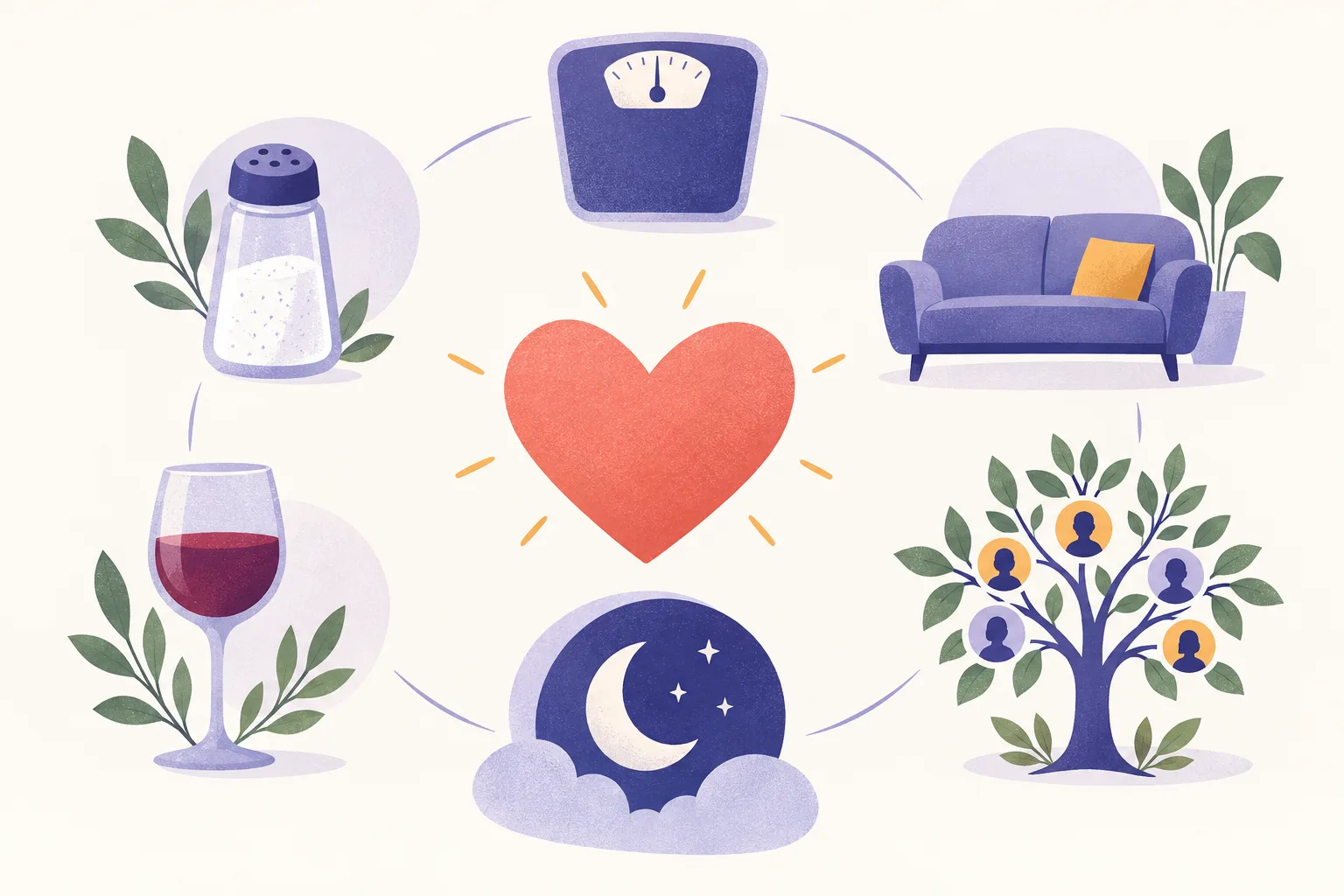
High blood pressure rarely has a single cause. In about 9 out of 10 people it develops from a mix of genes, age and lifestyle; this is called primary (essential) hypertension. In the rest, a specific medical condition or medication is responsible. Knowing your risk factors helps you see which ones you can change.
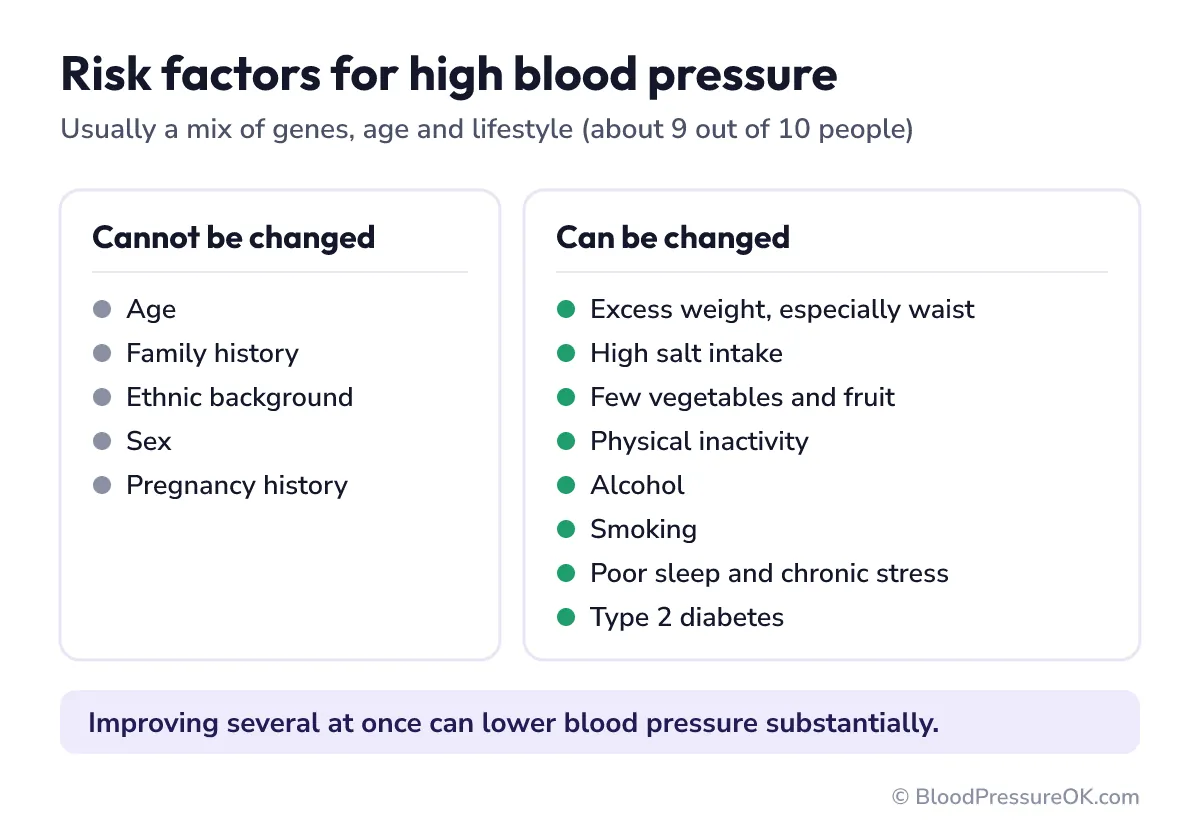
Risk factors you cannot change
- Age: arteries stiffen over the years, and systolic pressure rises. Most people over 65 have high blood pressure. See age and blood pressure.
- Family history: if one or both parents have hypertension, your risk is higher. Genes play a role, though shared eating habits matter too.
- Ethnic background: people of African descent tend to develop high blood pressure earlier and more severely, and people of South Asian descent also have a higher risk.
- Sex: men develop hypertension earlier; in women, blood pressure rises faster after menopause.
- Pregnancy history: women who had high blood pressure or preeclampsia during pregnancy have a higher risk later in life.
Risk factors you can change
| Factor | Why it matters |
|---|---|
| Excess weight, especially around the waist | Raises blood volume, hormone activity and nerve signals that increase pressure; about 1 mmHg drop per kg lost |
| High salt intake | Sodium makes the body retain water. See salt |
| Few vegetables and fruit | Low potassium intake raises blood pressure |
| Physical inactivity | Regular exercise lowers blood pressure by 5–8 mmHg. See exercise |
| Alcohol | Raises blood pressure in a dose-dependent way. See alcohol |
| Smoking | Raises blood pressure after each cigarette and damages arteries. See smoking |
| Poor sleep and chronic stress | Keep stress hormones and the nervous system activated |
| Type 2 diabetes and insulin resistance | Often occur together with hypertension and add to the damage |
These factors add up. Improving several of them at once can lower blood pressure substantially. See 5 Quick and Easy Ways to Lower Your Blood Pressure.
Secondary causes
In about 5–10% of people with hypertension, a specific cause is found. Treating it can improve blood pressure markedly, sometimes cure it.
- Obstructive sleep apnea: repeated breathing pauses at night. Clues are loud snoring, gasping in sleep and daytime sleepiness.
- Chronic kidney disease: both a cause and a consequence of high blood pressure.
- Primary aldosteronism: the adrenal glands produce too much of the hormone aldosterone, which retains sodium. It is more common than once thought, especially in people with hard-to-treat hypertension or low potassium.
- Narrowing of the kidney arteries (renal artery stenosis).
- Other hormone disorders: thyroid disease, Cushing's syndrome and, rarely, pheochromocytoma (a tumor that releases adrenaline).
- Narrowing of the aorta (coarctation), a cause in children and young adults.
Medicines and substances that raise blood pressure
- NSAID painkillers such as ibuprofen, naproxen and diclofenac
- Decongestants in cold and flu medicines (pseudoephedrine, phenylephrine)
- Combined oral contraceptives containing estrogen
- Corticosteroids such as prednisone
- Some antidepressants (for example venlafaxine) and stimulant medicines for ADHD
- Some immunosuppressants and certain cancer drugs
- Licorice in large amounts, cocaine and amphetamines
Do not stop a prescribed medicine on your own; ask your doctor or pharmacist whether an alternative is possible.
When to suspect a secondary cause
- high blood pressure before age 40, or in a child
- sudden onset or a sudden worsening of previously stable blood pressure
- very high readings, or hypertension that stays high despite three medicines
- low potassium in a blood test
- symptoms such as episodes of palpitations, sweating and headache, or loud snoring
What to do
If you have several risk factors, check your blood pressure at least once a year and learn to measure it correctly at home. High blood pressure usually causes no symptoms; see warning signs of hypertension.
Check a blood pressure reading
Related guides
- Measuring Blood Pressure Correctly: Step by Step
- Low Blood Pressure — the Unknown Threat?
- 5 Quick and Easy Ways to Lower Your Blood Pressure
Sources: ESH 2023 guideline · AHA/ACC 2025 guideline · MedlinePlus: High blood pressure.
General information, not medical advice. Talk to your doctor before changing your diet, exercise or medication. A reading of 180/110 or higher with chest pain, shortness of breath, back pain, numbness or weakness, vision or speech problems, confusion or a severe headache is an emergency: call 911 (US) or your local emergency number.