High Normal Blood Pressure (130–139 / 85–89)

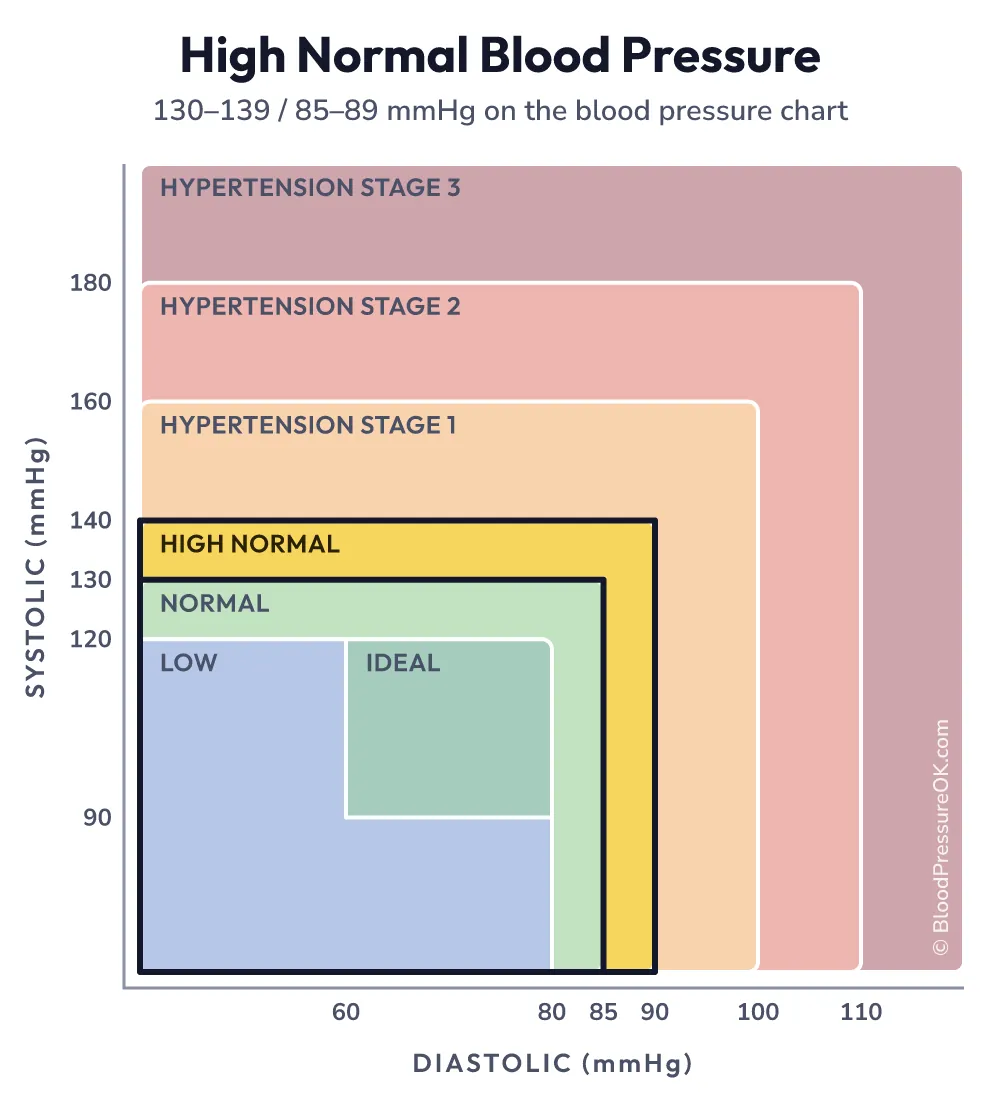
High normal blood pressure means 130–139 systolic and/or 85–89 diastolic. It is not yet hypertension by international standards, but it is the step just before it, and in the US the same reading already counts as stage 1 hypertension. For most people, it is a clear signal to act on lifestyle now.
What this range means
A reading is high normal when the systolic value is 130–139 and/or the diastolic value is 85–89, and neither number is in a higher category. Examples are 135/85 and 128/88. If one number reaches 140 systolic or 90 diastolic, the reading is hypertension stage 1 (grade 1).
Always judge the average of several readings taken correctly at rest, ideally at home over a week. A one-off reading after climbing stairs or drinking coffee can easily be 10 mmHg too high. See measuring blood pressure correctly.
Why it matters
- Higher risk than optimal: in long-term studies, people with high normal blood pressure had noticeably more heart attacks, strokes and heart failure over ten years than people with optimal readings.
- Likely progression: in the Framingham Heart Study, more than a third of middle-aged adults with high normal readings developed hypertension within four years, and about half of those aged 65 and older.
- Masked hypertension: some people with high normal office readings have higher values at home or at night. Home or 24-hour monitoring can reveal this.
International vs US view
| Reading | International (ESH 2023) | US (AHA/ACC 2017, confirmed 2025) |
|---|---|---|
| 130–139 / 85–89 | High normal | Stage 1 hypertension |
| Drug treatment | Only for very high-risk people | If cardiovascular disease, or high estimated risk |
Despite the different names, the advice is similar: lifestyle changes for everyone, and medication only for people whose overall risk is high.
Lifestyle comes first
In this range, lifestyle changes often bring blood pressure back to normal on their own. The effects below were measured in people with hypertension; in people with high normal values they tend to be somewhat smaller but still worthwhile.
| Measure | Approx. systolic reduction |
|---|---|
| DASH-style diet (vegetables, fruit, whole grains, low-fat dairy) | about 11 mmHg |
| Eating less sodium | 5–6 mmHg |
| Regular aerobic exercise | 5–8 mmHg |
| Weight loss | about 1 mmHg per kg (2.2 lb) |
| Drinking less alcohol | about 4 mmHg |
The effects partly add up. Not smoking does not lower the reading much, but it greatly reduces the overall risk to your heart and arteries. Practical tips: 5 Quick and Easy Ways to Lower Your Blood Pressure, salt and blood pressure and exercise and blood pressure.
Is medication ever needed?
Usually not. The European guideline considers drug treatment at high normal levels only for people at very high risk, especially those who already have coronary heart disease (for example after a heart attack). In the US, medication is considered at this level for people with existing cardiovascular disease or a high estimated 10-year risk, which often applies to people with diabetes or chronic kidney disease. Your doctor can estimate your risk from your age, cholesterol, smoking status, blood sugar and kidney function.
What to do now
- Confirm the readings with a week of home measurements.
- Start the lifestyle changes above; pick one or two you can stick with.
- Recheck at least once a year, or sooner if your readings rise.
- See your doctor if your home average reaches 135/85 or more, or if you have diabetes, kidney or heart disease.
See also risk factors for high blood pressure.
Reader questions
Selected from questions readers asked on this page, shortened and anonymized. Answers by the BloodPressureOK editorial team — general information, not a personal diagnosis.
I'm in my 20s or 30s with readings around 135/87. Does that matter at my age?
Yes, more than many young people think. Risk builds up over decades, so a reading that is only slightly raised at 30 matters because of the many years ahead, and readings in this range often keep rising. Studies that followed young adults found that even moderately raised blood pressure in early adulthood was linked to more heart disease decades later. The good news is that this is the age when lifestyle changes work best. Confirm the readings at home, then focus on weight, salt, alcohol, exercise and sleep, and avoid energy drinks and nicotine. If your readings reach stage 1 or higher at a young age, ask your doctor whether tests for an underlying cause are needed.
My top number is fine but my bottom number is 85–89, like 118/88. What does that mean?
The reading is high normal, because the higher category counts: 118/88 is classified by its diastolic value. In the US system, any diastolic value from 80 to 89 is already stage 1 hypertension. A raised diastolic value with a normal systolic value is most common in adults under about 50 and is often linked to excess weight, especially around the waist, regular alcohol, inactivity and sleep apnea. Loud snoring with breathing pauses or daytime sleepiness is worth mentioning to your doctor. The lifestyle measures on this page lower both numbers, and the diastolic value often responds well to weight loss and cutting back on alcohol.
My doctor gave me a few weeks to lower my blood pressure before starting medication. What works fastest?
Several changes act within days to weeks. Eating less salt lowers blood pressure within one to two weeks; the quickest gains come from cutting processed meat, ready meals, salty snacks, bread-heavy meals and restaurant food. In the DASH trial, a diet rich in vegetables, fruit, legumes and low-fat dairy lowered blood pressure within two weeks. Cutting back on alcohol works within a few weeks. Regular brisk walking or cycling also helps, and the effect of each session lasts for many hours. Weight loss takes longer but adds up steadily. Measure at home twice a day for a week before your follow-up and bring the log, so your doctor can judge your real average rather than a single office reading.
I take blood pressure medication and my readings are now high normal. Can lifestyle changes get me off the pills?
Sometimes, but only together with your doctor. A high normal reading on medication usually means the medicine is working, not that you no longer need it; blood pressure medicines work only while you take them, so readings typically go back up after stopping, often within days or weeks. People who make lasting changes, such as losing a significant amount of weight, cutting down on alcohol and salt and exercising regularly, can sometimes reduce the dose or the number of medicines. If you want to try, discuss a plan with your doctor: one change at a time, with regular home readings and a clear threshold at which treatment is restarted. Never stop on your own.
My blood pressure was very high after an injury or a dental visit. Will it come down?
Usually, yes. Pain, fear and stress release adrenaline, which can push blood pressure up by 20 to 40 mmHg or more for a while. Local anesthetics at the dentist often contain a small amount of adrenaline as well. Readings taken in such situations do not show your usual blood pressure. Recheck at home when you are calm and pain-free, ideally over several days. If your readings stay at 140/90 or above after the pain or stress has settled, see your doctor. Dentists often postpone non-urgent treatment when readings are very high, around 180/110 or more, and may ask you to see your doctor first. If a high reading comes with chest pain, breathlessness or neurological symptoms, call 911 (US) or your local emergency number.
Which home blood pressure monitor should I buy?
Choose an automatic upper-arm monitor that has been independently validated; validatebp.org (US) and stridebp.org (international) list tested models. Getting the cuff size right matters more than the brand: measure around the middle of your upper arm and pick a cuff that fits. Useful features are a memory that stores readings with date and time, averaging of several readings, and a symbol for an irregular heartbeat. An app connection is convenient but not necessary. Wrist monitors are less reliable, and finger devices and smartwatches are not accurate enough for diagnosis. Take the new monitor to your next appointment and compare it with your doctor's device. See measuring blood pressure correctly.
Do beet juice, hawthorn, acupuncture or similar remedies help?
The evidence is modest and mixed. Beetroot juice contains nitrate, and in short trials it lowered systolic pressure by a few mmHg, though it is not known how long that lasts. Hawthorn has been tested only in small studies with inconsistent results, and it can interact with heart medicines. Acupuncture trials have been small and their results varied; there is no good evidence that it lowers blood pressure in the long term. None of these has close to the effect of salt reduction, a DASH-style diet, regular exercise and weight loss, which together can lower systolic pressure by 10 mmHg or more. If you want to try a supplement, tell your doctor or pharmacist, especially if you take other medicines. More in natural remedies for blood pressure.
Can high normal blood pressure cause headaches or dizziness?
Very unlikely. Blood pressure in this range does not cause symptoms; even much higher values often go unnoticed. When headaches, dizziness or tiredness appear together with a reading around 135/85, it is more often the other way round: pain, poor sleep, stress or feeling unwell raise the reading temporarily. That is why the symptoms themselves deserve attention. See your doctor if they are new, persistent or getting worse, and call 911 (US) or your local emergency number for a sudden severe headache, weakness or numbness on one side, trouble speaking, vision loss or chest pain. Do not take the absence of symptoms as reassurance either; high normal readings are a reason to act on lifestyle whether or not you feel anything.
Example readings in this category
Check a blood pressure reading
Related guides
- Ideal Blood Pressure (Below 120/80): What It Means
- Normal Blood Pressure (120–129 / 80–84)
- Hypertension Stage 1 (140–159 / 90–99): What to Do
- Hypertension Stage 2 (160–179 / 100–109)
- Hypertension Stage 3 (180/110 and Above): Act Now
- Low Blood Pressure (Hypotension): Below 90/60
- Measuring Blood Pressure Correctly: Step by Step
- 5 Quick and Easy Ways to Lower Your Blood Pressure
Sources: ESH 2023 guideline · AHA/ACC 2025 guideline · MedlinePlus: High blood pressure.
General information, not medical advice. Talk to your doctor before changing your diet, exercise or medication. A reading of 180/110 or higher with chest pain, shortness of breath, back pain, numbness or weakness, vision or speech problems, confusion or a severe headache is an emergency: call 911 (US) or your local emergency number.