Low Blood Pressure (Hypotension): Below 90/60

Low blood pressure (hypotension) usually means a systolic value below 90 or a diastolic value below 60 mmHg. For many healthy people, especially young and slim adults, this is simply their normal and causes no problems. It becomes relevant when it causes symptoms such as dizziness or fainting, or when it drops suddenly.
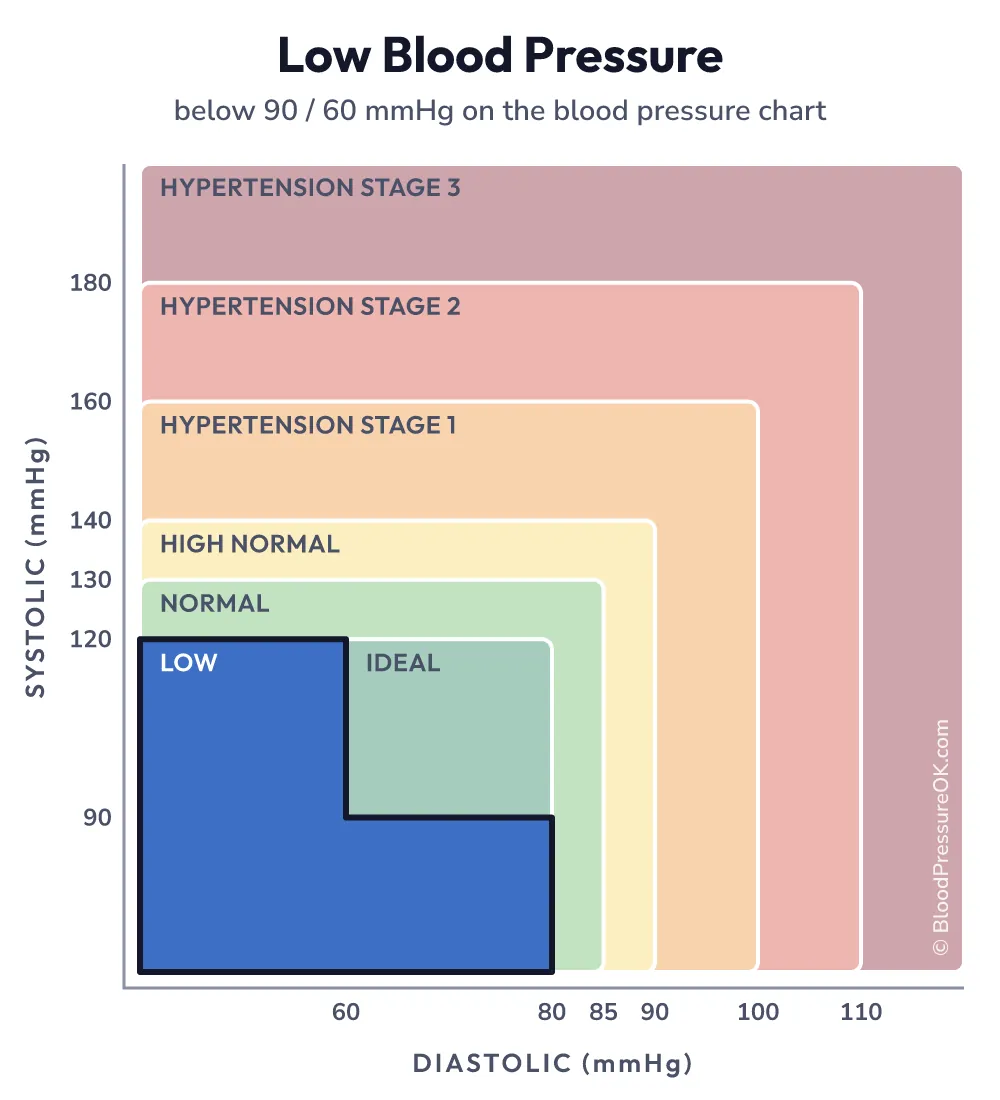
What counts as low?
There is no single official cut-off. Readings with a systolic value below 90 or a diastolic value below 60, such as 88/58 or 104/58, are generally called low. If the other number is raised, the raised number decides the category: 128/50 counts as normal by its upper number, with a low lower number and a wide gap worth mentioning to your doctor. A reading like 95/62 is low-normal and, without symptoms, not a concern. What matters more than the number is how you feel and whether the value has changed compared with your usual readings.
A special form is orthostatic hypotension: a drop of at least 20 mmHg systolic or 10 mmHg diastolic within three minutes of standing up. It can occur even in people whose blood pressure is normal or high while sitting.
Common causes
- Dehydration: too little fluid, heat, heavy sweating, vomiting or diarrhea.
- Medication: blood pressure drugs, water pills (diuretics), nitrates, some antidepressants, drugs for prostate problems or Parkinson's disease, and erectile dysfunction drugs, especially in combination with nitrates.
- Heart problems: a very slow heart rate, heart valve disease, heart failure or a heart attack.
- Hormone disorders: adrenal insufficiency (Addison's disease), an underactive thyroid, low blood sugar.
- Pregnancy: blood pressure normally falls in the first and second trimesters and returns to pre-pregnancy levels later.
- Nervous system disorders: Parkinson's disease or nerve damage from diabetes can disturb blood pressure control when standing.
- Blood loss, severe infection or allergic reaction: these can cause a sudden, dangerous drop (shock).
- Long bed rest, alcohol and large meals can also lower blood pressure.
Symptoms
- dizziness or light-headedness, especially when standing up
- fainting or feeling about to faint
- blurred or "grayed-out" vision
- tiredness, weakness, difficulty concentrating
- nausea, cold hands and feet
How low is too low?
- Below 70 systolic or 40 diastolic (very low): measure again now. If the reading is real and you feel faint, confused, short of breath, or cold and clammy, call 911 (US) or your local emergency number. Otherwise contact a doctor today.
- 70–79 systolic or 40–49 diastolic (clearly low): measure again. If it is confirmed, or if you have any symptoms such as dizziness, fainting or confusion, contact a doctor promptly, the same day.
- 80–89 systolic or 50–59 diastolic: often harmless if you feel well. See a doctor if you feel dizzy, light-headed or faint.
Call 911 (US) or your local emergency number if low blood pressure comes with confusion, cold, clammy or pale skin, rapid shallow breathing, a weak and fast pulse, chest pain, or after heavy bleeding or a severe allergic reaction. These are signs of shock.
When to see a doctor
- you faint, or nearly faint, especially more than once or without an obvious trigger
- you get dizzy every time you stand up
- you are older and have had falls
- your blood pressure is much lower than usual, for example after starting a new medication
- you also have palpitations, shortness of breath or chest discomfort
Your doctor will usually measure your blood pressure lying down and after standing, review your medications, and may order blood tests and an ECG.
Practical tips
- Drink enough: spread water over the day; drink a glass or two before getting up if mornings are worst. If you have heart or kidney disease, ask your doctor how much fluid is right for you.
- Get up slowly: sit on the edge of the bed for a minute before standing.
- Use your muscles: crossing your legs, tensing your thighs and buttocks or clenching your fists can stop a faint when you feel it coming.
- Eat smaller meals and go easy on alcohol, especially in hot weather.
- Compression stockings can help if dizziness on standing is frequent.
- Salt: a little more salt may help some people, but only after checking with your doctor, particularly if you have high blood pressure, heart or kidney disease.
- Medication: if you take blood pressure drugs and feel dizzy, do not stop them on your own; ask whether the dose or timing should change.
Learn more about when low blood pressure is a problem in low blood pressure: the unknown threat?, and see ideal blood pressure for the healthy range.
Reader questions
Selected from questions readers asked on this page, shortened and anonymized. Answers by the BloodPressureOK editorial team — general information, not a personal diagnosis.
Are readings like 90/58 normal for a teenager or child?
Often, yes. Children and teenagers have lower blood pressure than adults, and it rises gradually with growth. A slim, healthy 15-year-old with a reading around 91/58 and no symptoms usually has nothing to worry about. For children, doctors judge readings with percentile charts based on age, sex and height rather than adult cut-offs, so a value that looks low for an adult can be normal for a younger child. Fainting is also fairly common in teenagers, typically when standing for long periods, in heat, or after skipping meals or drinks. A doctor should check it if fainting happens during exercise, comes with chest pain or palpitations, happens repeatedly, or if there is unusual tiredness, paleness or weight loss.
Only my bottom number is low, for example 112/43. Is that hypotension?
Not in the sense that usually matters. Low blood pressure becomes a concern mainly when the systolic value is below about 90 and causes symptoms. A low diastolic value with a normal systolic value is common in older adults, because stiffer arteries recoil less between heartbeats, and in some fit young people. On its own, without symptoms, it is usually not dangerous. It is worth discussing with a doctor if the gap between the two numbers is very wide, if the diastolic value is repeatedly below about 50, or if you have heart disease, because the heart muscle receives its own blood supply mainly between beats. A leaking aortic valve, anemia or an overactive thyroid can also cause a low diastolic value, and a doctor can check for these with an examination and, if needed, an ultrasound of the heart.
My blood pressure medication makes my readings drop too low. What should I do?
Talk to your doctor soon, but do not stop the medication or change the dose on your own. Dizziness, weakness or readings far below your usual level after starting or adding a medicine often mean the dose, the combination or the timing needs adjusting, and there are usually good alternatives. Taking tablets only when the reading is high, or skipping doses and then restarting, makes blood pressure swing more and can cause exactly these drops. Be especially careful when you are dehydrated from heat, vomiting or diarrhea, because water pills and some other blood pressure drugs then lower blood pressure more strongly; ask your doctor in advance what to do on sick days. If you faint, or feel confused, cold and clammy, call 911 (US) or your local emergency number.
I'm fit and have no symptoms, but I was turned away from donating blood because of low blood pressure. Should I worry?
Usually not. Blood services set minimum values, often around 90/50, to protect donors from fainting after giving blood. These are safety rules for donation, not a diagnosis. Regular endurance training lowers resting blood pressure and heart rate, so readings in the 90s over the 50s can be normal in a fit person who feels well. A lower number below 50, as in 97/49, is clearly low, though: measure again, and if it is confirmed or you have any symptoms, see a doctor the same day. Also look at the bigger picture. See a doctor if your readings have fallen clearly below your own usual values without an obvious reason, if you feel dizzy or faint, if exercise feels harder than before, or if there is a family history of heart rhythm problems or sudden cardiac death. An ECG and, if needed, an ultrasound of the heart can rule out heart problems.
I'm always tired and my blood pressure is low. Is the low blood pressure the cause?
It can be, but it is often not the whole story. Fatigue has many possible causes, and several of them can lower blood pressure at the same time: anemia or iron deficiency, an underactive thyroid, dehydration, low blood sugar, infections, adrenal insufficiency, side effects of medicines, depression and poor sleep. Ask your doctor about basic blood tests such as a blood count, iron levels, thyroid function, blood sugar and electrolytes. Before the visit, keep a short log of readings together with how you feel, and measure once lying down and again after standing for one and three minutes. This shows whether symptoms appear when blood pressure drops, which helps the doctor tell a blood pressure problem from something else.
How can I raise my blood pressure quickly when I feel faint?
Lie down and raise your legs, or at least sit down with your head low; this is the fastest way to get blood back to the brain and prevents injuries from falling. If you feel a faint coming while standing, cross your legs and tense your thighs and buttocks, or clench your fists. Drinking about 16 oz (500 ml) of water fairly quickly raised blood pressure within about half an hour in studies of people with low blood pressure on standing. Get up slowly afterwards. Alcohol, including red wine, lowers blood pressure and is not a remedy. Hot showers, saunas and large carbohydrate-rich meals can make things worse. If this happens often, see a doctor rather than relying on quick fixes.
My blood pressure dropped during a stomach bug or the flu. When is that a problem?
Fluid loss from diarrhea, vomiting, fever or heavy sweating, combined with eating and drinking less, often lowers blood pressure for a few days. Small, frequent sips of water or an oral rehydration solution usually help. Seek medical care the same day if you cannot keep fluids down, pass very little urine, feel dizzy whenever you stand up, or if diarrhea lasts more than a few days, particularly in older people or if you take water pills or other blood pressure medication. Call 911 (US) or your local emergency number if low blood pressure comes with confusion, cold, clammy or mottled skin, a fast and weak pulse, rapid breathing, or high fever with feeling very unwell, as these can be signs of shock or severe infection.
I keep fainting and my blood pressure is low, but my doctors have found nothing. What else can be checked?
Repeated fainting deserves a structured work-up, even if a first round of tests was normal. Useful steps include blood pressure and pulse lying down and after standing, a longer heart rhythm recording (from a few days to an implantable monitor for rare episodes), an ultrasound of the heart and a tilt-table test, which can show orthostatic hypotension, reflex fainting or postural orthostatic tachycardia syndrome (POTS). Blood tests can look for anemia, thyroid problems and adrenal insufficiency, and a neurologist may test the nerves that control blood pressure. Ask whether there is a specialized syncope or autonomic clinic near you. Bring a log of episodes with readings, triggers and symptoms, and ask your doctor whether driving is safe until the cause is clear.
My monitor showed a strange reading like 111/19 or a lower number higher than the top one. Is that real?
Most likely not. The diastolic value cannot be higher than the systolic value, and a sudden diastolic reading in the 20s with a normal systolic value in someone who is awake and talking is almost always a measurement error. Common reasons are moving or talking during the measurement, a loose or wrongly placed cuff, an irregular heartbeat such as atrial fibrillation, a weak battery or a faulty device. Sit quietly for a few minutes and measure again, following the steps in measuring blood pressure correctly. If odd readings keep appearing, have your monitor checked against your doctor's device. Trust how you feel: if you are faint, confused or unwell, seek help regardless of what the screen shows.
Example readings in this category
Check a blood pressure reading
Related guides
- Ideal Blood Pressure (Below 120/80): What It Means
- Normal Blood Pressure (120–129 / 80–84)
- High Normal Blood Pressure (130–139 / 85–89)
- Hypertension Stage 1 (140–159 / 90–99): What to Do
- Hypertension Stage 2 (160–179 / 100–109)
- Hypertension Stage 3 (180/110 and Above): Act Now
- Measuring Blood Pressure Correctly: Step by Step
- 5 Quick and Easy Ways to Lower Your Blood Pressure
Sources: ESH 2023 guideline · MedlinePlus: Low blood pressure · NHLBI: Low blood pressure.
General information, not medical advice. Talk to your doctor before changing your diet, exercise or medication. A reading of 180/110 or higher with chest pain, shortness of breath, back pain, numbness or weakness, vision or speech problems, confusion or a severe headache is an emergency: call 911 (US) or your local emergency number.