Blood Pressure 180 over 46 - what do these values mean?
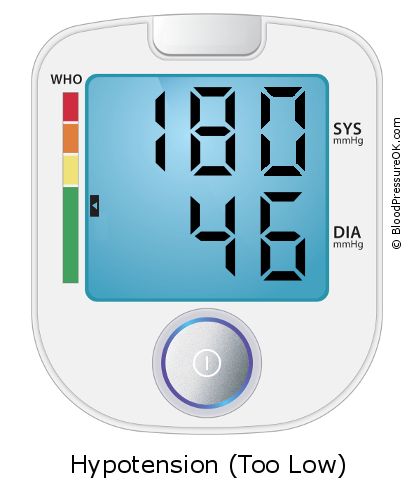
No. 180/46 counts as hypertension stage 3 by its upper number, but the lower number of 46 is clearly low (diastolic below 50). Measure again; if it is confirmed, or if you feel dizzy, faint or confused, contact a doctor promptly — the same day.
- International (ESH)Hypertension stage 3
- US guideline (AHA/ACC)Stage 2 hypertension
- Pulse pressure134 mmHg
- Mean arterial pressure91 mmHg
What to do now
- Measure again after a few minutes of quiet rest.
- If it is confirmed, or if you have any symptoms — dizziness, fainting, confusion — contact a doctor promptly, the same day.
- Sit quietly for 5 minutes and measure again.
- Still at 180/110 or higher AND chest pain, shortness of breath, back pain, numbness or weakness, vision or speech problems, confusion or a severe headache? Call 911 (US) or your local emergency number — this can be a hypertensive emergency.
- Still this high without symptoms? Contact your doctor the same day. Do not take extra doses of medication on your own.
The systolic (upper) number decides the category: when the two numbers fall into different categories, the higher one counts. Your lower number of 46 is clearly low (diastolic below 50), and the gap of 134 mmHg between the two numbers is wide — see “What to do now” above. This pattern — high systolic, normal or low diastolic — is called isolated systolic hypertension and is common after 50.
Blood pressure 180/46 on the blood pressure chart
- Low blood pressure
- Ideal (optimal)
- Normal
- High normal
- Hypertension stage 1
- Hypertension stage 2
- Hypertension stage 3
Read more about this category: Hypertension stage 3.
International and US categories
| Category | Systolic / diastolic (mmHg) | US (AHA/ACC) |
|---|---|---|
| Ideal (optimal) | < 120 and < 80 | Normal |
| Normal | 120–129 and/or 80–84 | Elevated / stage 1 |
| High normal | 130–139 and/or 85–89 | Stage 1 |
| Hypertension stage 1 | 140–159 and/or 90–99 | Stage 2 |
| Hypertension stage 2 | 160–179 and/or 100–109 | Stage 2 |
| Hypertension stage 3 | ≥ 180 and/or ≥ 110 | Stage 2 / severe > 180/120 |
| Low blood pressure | systolic < 90 or diastolic < 60, the other number not raised | Low |
International categories: European Society of Hypertension (ESH) 2023, office readings. Home readings use lower thresholds — hypertension from an average of 135/85. A reading with one raised and one low number counts by the raised one.
Pulse pressure and mean arterial pressure
A pulse pressure of 134 mmHg is wide (above 60). In older adults it usually reflects stiffer arteries. Mean arterial pressure — the average pressure perfusing your organs — is about 91 mmHg, within the typical range of about 70–100.
Measure it right
- No caffeine, exercise or smoking for 30 minutes; empty your bladder.
- Sit with back supported, feet flat, for 5 minutes. Don't talk.
- Upper-arm cuff of the right size on bare skin, arm supported at heart level.
- Two readings a minute apart, morning and evening, for 7 days — use the average.
Details: Measuring Blood Pressure Correctly: Step by Step
Check another reading
Nearby readings
Sources: ESH 2023 guideline (international categories) · AHA/ACC 2025 guideline (US categories, unchanged from 2017) · MedlinePlus: Low blood pressure. Reviewed by the BloodPressureOK editorial team · last reviewed October 25, 2026.
This page explains one reading in general terms. High blood pressure is diagnosed from repeated measurements. Not medical advice — talk to your doctor about your readings.