Blood Pressure 126 Over 40–117: Which Are OK?
With an upper value of 126, the answer depends on your lower number. Here are all readings, sorted by what they mean.
On its own, a systolic (upper) value of 126 mmHg is Normal by the international categories (2023 ESH guideline) and Elevated under the 2025 AHA/ACC guideline. The worse of your two numbers decides the category, so a raised diastolic (lower) value moves a 126 reading up: from 126/85 it counts as high normal, from 126/90 it counts as stage 1, from 126/100 it counts as stage 2, from 126/110 it counts as stage 3. Readings below 126/66 have a pulse pressure above 60 mmHg — a wide gap that is common after 60 and worth mentioning to your doctor.
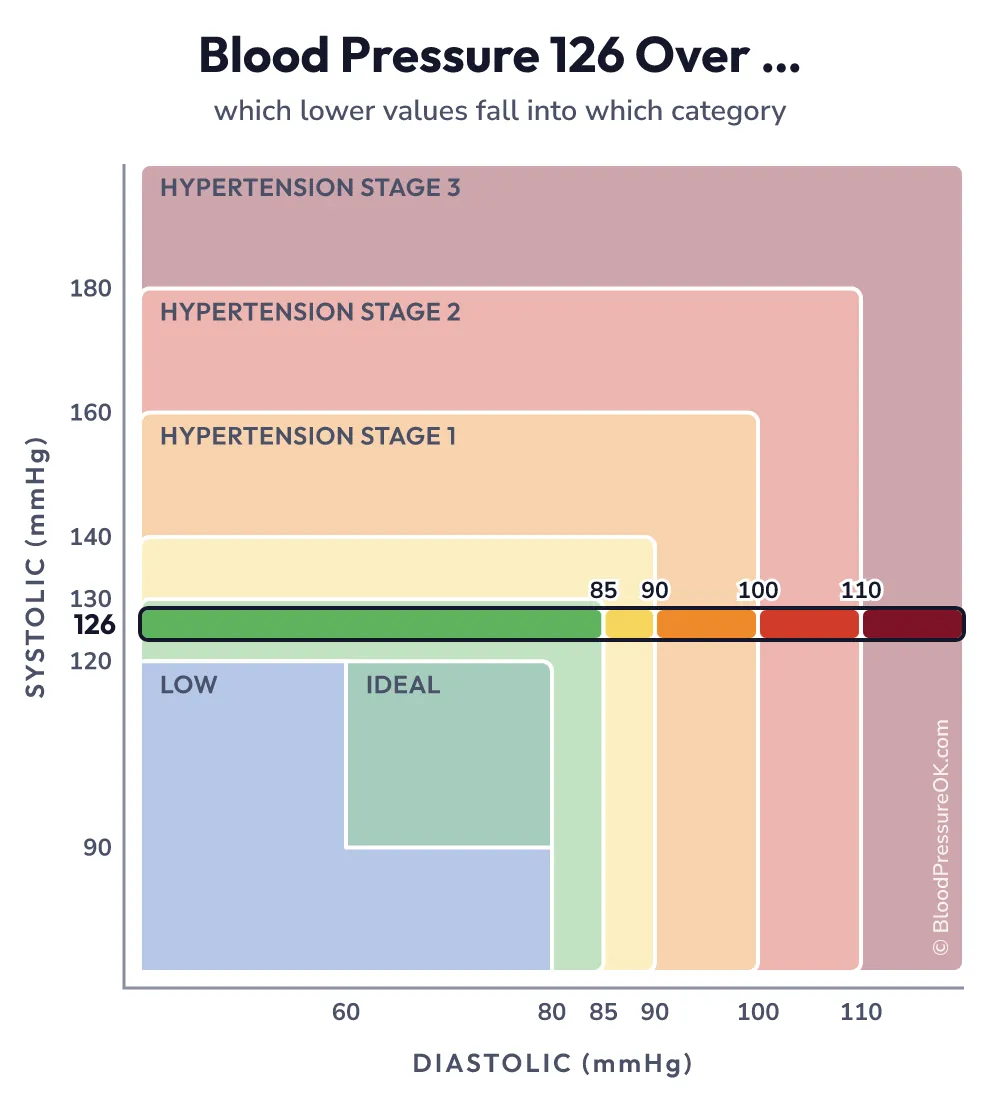
Normal 126/40 to 126/84
- 126/40 ↓
- 126/41 ↓
- 126/42 ↓
- 126/43 ↓
- 126/44 ↓
- 126/45 ↓
- 126/46 ↓
- 126/47 ↓
- 126/48 ↓
- 126/49 ↓
- 126/50
- 126/51
- 126/52
- 126/53
- 126/54
- 126/55
- 126/56
- 126/57
- 126/58
- 126/59
- 126/60
- 126/61
- 126/62
- 126/63
- 126/64
- 126/65
- 126/66
- 126/67
- 126/68
- 126/69
- 126/70
- 126/71
- 126/72
- 126/73
- 126/74
- 126/75
- 126/76
- 126/77
- 126/78
- 126/79
- 126/80
- 126/81
- 126/82
- 126/83
- 126/84
↓ = the lower number is below 50: these readings count as normal by the upper number, but the low lower number needs checking — see each page.
Hypertension stage 1 126/90 to 126/99
Hypertension stage 2 126/100 to 126/109
What to do with a reading of 126 over …
Normal internationally, though above the ideal of under 120 (the US calls it elevated). Re-check once or twice a year and keep an eye on salt, weight and exercise. From 126/110 the lower number makes it stage 3: sit quietly for 5 minutes and measure again; if it stays at 110 or higher, contact a doctor the same day, and call 911 (US) or your local emergency number with chest pain, shortness of breath, back pain, numbness or weakness, vision or speech problems, confusion or a severe headache. A lower number below 50 (from 126/49 down) is clearly low: measure again, and if it is confirmed or you feel dizzy, faint or confused, contact a doctor the same day. Keep your readings in a free blood pressure log and read how to measure correctly.
Sources: ESH 2023 guideline · AHA/ACC 2025 guideline.